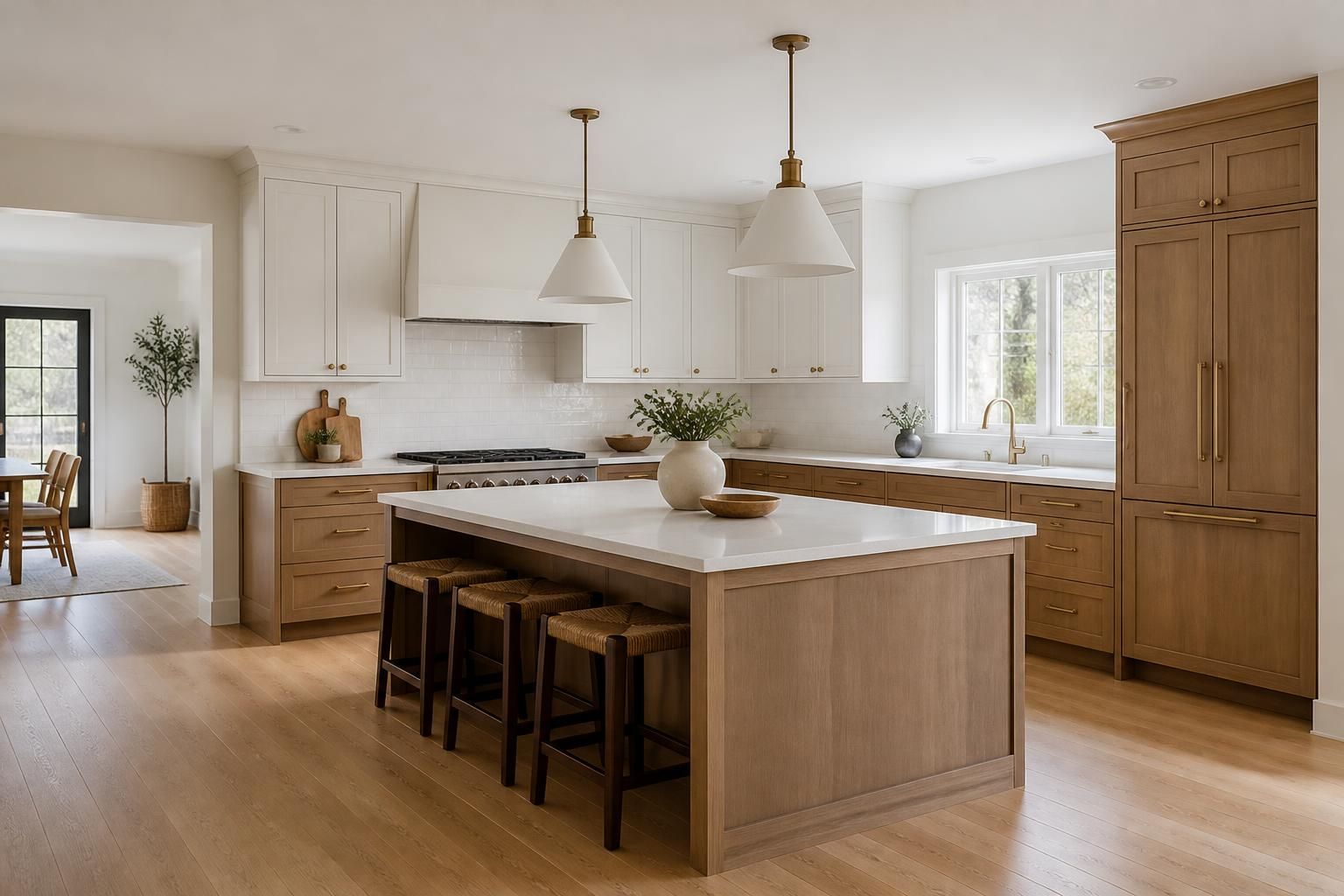
TL;DR: Turn a completed renovation into a neighbourhood pipeline by asking permission to share the project, making the finished work easy to see online, and following up respectfully with nearby homeowners. A tidy site, an honest yard sign, real project photos, and a neighbour’s recommendation can help you earn the trust that turns local interest into estimate requests.
The neighbourhood is already watching
Your best nearby prospects have seen your work in progress. They noticed whether your crew kept the site tidy, respected the homeowner’s space, and left a finished kitchen, bathroom, basement, or addition that fits the street. After the job wraps, ask the homeowner what they’re comfortable with, then use a few simple follow-up steps to make it easy for interested neighbours to learn about your work. That is a practical way to get more leads as a contractor without blanketing an entire city with ads.
What do the neighbours already know about you?
For weeks, nearby homeowners may have seen your crew truck, materials arriving, and the renovation taking shape. They’ve had a chance to notice the details that a portfolio can’t fully show: whether the driveway stayed clear, the crew was considerate, and the site looked organized at the end of the day.
That matters because a neighbour considering a major renovation isn’t only asking, “Can they build it?” They’re also wondering what it would feel like to have your crew in their home. A professional, tidy site helps answer that question before you ever speak.
These neighbours are a warm audience, but they are not automatically prospects. Don’t assume they want a sales pitch or that you can use the homeowner’s address. Ask first, and let the homeowner set the boundaries.
What should happen in the 48 hours after a job wraps?
Once the homeowner has had a chance to walk through the completed work, ask for an honest review and whether they’re comfortable with you mentioning the street or project. Be clear about where you might use the information, such as in a project post or a short note to nearby homes. Never share a client’s address, photos, or project details without permission.
You can also ask whether they’d be comfortable with a yard sign, or with you leaving a note for nearby neighbours. Make it easy to say no. The goal is to leave a good final impression, not make the customer feel that their home is part of a marketing campaign.
What makes a yard sign useful rather than annoying?
Keep the sign simple enough to read at a glance. Include your company name or logo, one renovation service such as “Kitchen Renovations,” a phone number or website, and a plain line like “Ask about our renovation work nearby.” Don’t use fake urgency or a vague promise you can’t back up.

Place it only where the homeowner allows and local rules permit. Check municipal bylaws and any applicable community or property rules before putting it up. For example, Toronto’s contracted-services sign requirements cover owner or occupant consent, placement, size, and removal timing. Rules vary by location, so don’t treat one city’s requirements as a rule for every town.
Agree on when the sign comes down, and remove it promptly when the homeowner asks. A sign left up after the project is finished can undo the impression your crew worked hard to make.
How can a doorstep note start a conversation without a hard sell?
A brief note can introduce your company to people who saw the renovation but don’t know how to reach you. Keep it neighbourly, specific, and low-pressure. Don’t leave it in a mailbox, and check local rules before distributing door-to-door materials.

For example:
Hi neighbour,
We recently finished a kitchen renovation at 42 Elm. If you’re thinking about a kitchen, bathroom, basement, addition, or whole-home project, you can see our work at [website] or call [phone number]. No pressure if you’re not planning a renovation right now.
[Company name]
Use the real project and address only if the homeowner has agreed. Give the recipient one clear next step, and leave it there. A respectful note makes it easier for someone to enquire when they’re ready, without making them feel they have to respond on the spot.
How do project photos and your Google Business Profile help?
Photograph the finished work while it’s fresh and the space is clean. Get a few useful views: the full room, a detail that shows the finish, and, where appropriate, a before-and-after pair. Ask the homeowner before photographing or sharing images, and avoid showing personal belongings or identifying details they’d rather keep private.
Add approved photos to your website and Google Business Profile. Google’s photo and video guidance recommends clear, well-lit images that accurately represent the business. Keep captions factual. If the homeowner has approved a neighbourhood reference, you can mention it naturally in a project description; don’t stuff street or neighbourhood names into content just for search.
Photos and reviews help a nearby homeowner connect the work they saw with the business they can hire. They also give your profile fresh proof of what you do, whether it’s kitchens, bathrooms, basements, additions, or whole-home remodelling.

Can Google Ads focus on the area around a completed job?
Yes. A small, carefully planned campaign around a neighbourhood where you’ve recently completed work can be more relevant than a broad campaign covering every place you might travel. This is one of the practical Google Ads for contractors tactics to consider when you want to reach homeowners near the work you can show.
Keep the campaign honest and specific. Use accurate location targeting, an ad that names the renovation service, and a landing page with real examples of your work. Review the settings and search terms so you understand who may see the ads and what they’re searching for. A tighter radius doesn’t guarantee better leads or a particular cost per lead; it simply gives you a focused test in an area where people have already seen your work.
This is a more deliberate approach to lead generation for trades than paying to reach a broad service area with the same generic message everywhere, and it is the kind of Google Ads for contractors work that starts from a job you can actually point to.
Why do reviews work as neighbourhood proof?
A neighbour may have already asked the homeowner, “How was the renovation?” That personal conversation can carry more weight than an ad because it comes from someone they know. A genuine public review can extend that reassurance to other people who are researching contractors nearby.
Make review requests part of your closeout process, and ask every customer for honest feedback without offering a reward or telling them what to write. Reviews that describe communication, cleanliness, and the finished project help future customers understand what working with you may be like. See this review playbook for contractors for a practical way to make requests a consistent part of your workflow.
What if the map pack doesn’t reach the next neighbourhood?
A finished project gives your business a real foothold in a neighbourhood, even if you don’t appear prominently in every nearby Google Maps search. Keep building local proof through approved project photos, accurate service information, and genuine reviews. A job across town can become useful evidence that you work in that area, even though it does not guarantee a particular map ranking.
For more on visibility beyond the closest searchers, read how renovation contractors can keep winning jobs when Google Maps only shows the closest crew.
How do you turn one project into an ongoing referral rhythm?
Stay in touch with the homeowner after the project, not only when you need another lead. A thank-you message and a check-in after they’ve had time to use the new space can keep the relationship warm. If a neighbour asks who did the kitchen, the homeowner will have your name and contact details handy.
With permission, keep a simple record of the project, the review request, approved photos, and any neighbour enquiries. That gives a one- or two-crew renovation company a repeatable closeout routine instead of another task to remember when the next job starts. It is the least glamorous item on any list of contractor marketing tips, and one of the few that compounds: every finished job adds another street where people have already seen what you do. For more on keeping past customers in the loop, see how contractors can turn past customers into booked jobs before winter.
When should you not market to the neighbours?
Skip neighbourhood promotion for rental or investor projects when the owner isn’t local or hasn’t approved it, and for work you wouldn’t want to represent publicly. Don’t place a sign or leave notes on a street where the homeowner says no. Respect that answer immediately.
Door-to-door outreach is also a poor fit when local bylaws prohibit it or the homeowner is uncomfortable with neighbours being approached. You can still ask whether they’re open to a review or a private referral, but don’t push. A respectful closeout is worth more than a few extra impressions, and it is the part of digital marketing for contractors that no ad budget can replace: a neighbour who already trusts the house next door.
Who is this not for?
This approach isn’t for handymen chasing $800 repairs or price-only flippers looking for the cheapest possible quote. It’s also not for a contractor who would rather blanket a whole city with ads than do a small local follow-up properly. It works best for renovation companies that care about how their work, crew, and customer experience are seen by the people living nearby.
Build a steadier run of neighbourhood estimate requests
If you want a repeatable way to turn completed renovations into a steadier run of estimate requests from your own neighbourhoods, book a discovery call.
Key Takeaways
- Neighbours have already seen your crew, worksite, and finished renovation, making them a natural local audience to approach with care.
- Ask the homeowner for permission before mentioning the address, sharing project photos, putting up a sign, or leaving neighbours a note.
- Use clear signs, brief notes, accurate Google Business Profile content, and focused ads without fake urgency or exaggerated promises.
- Make reviews and homeowner follow-up part of your regular closeout routine, and respect a no immediately.