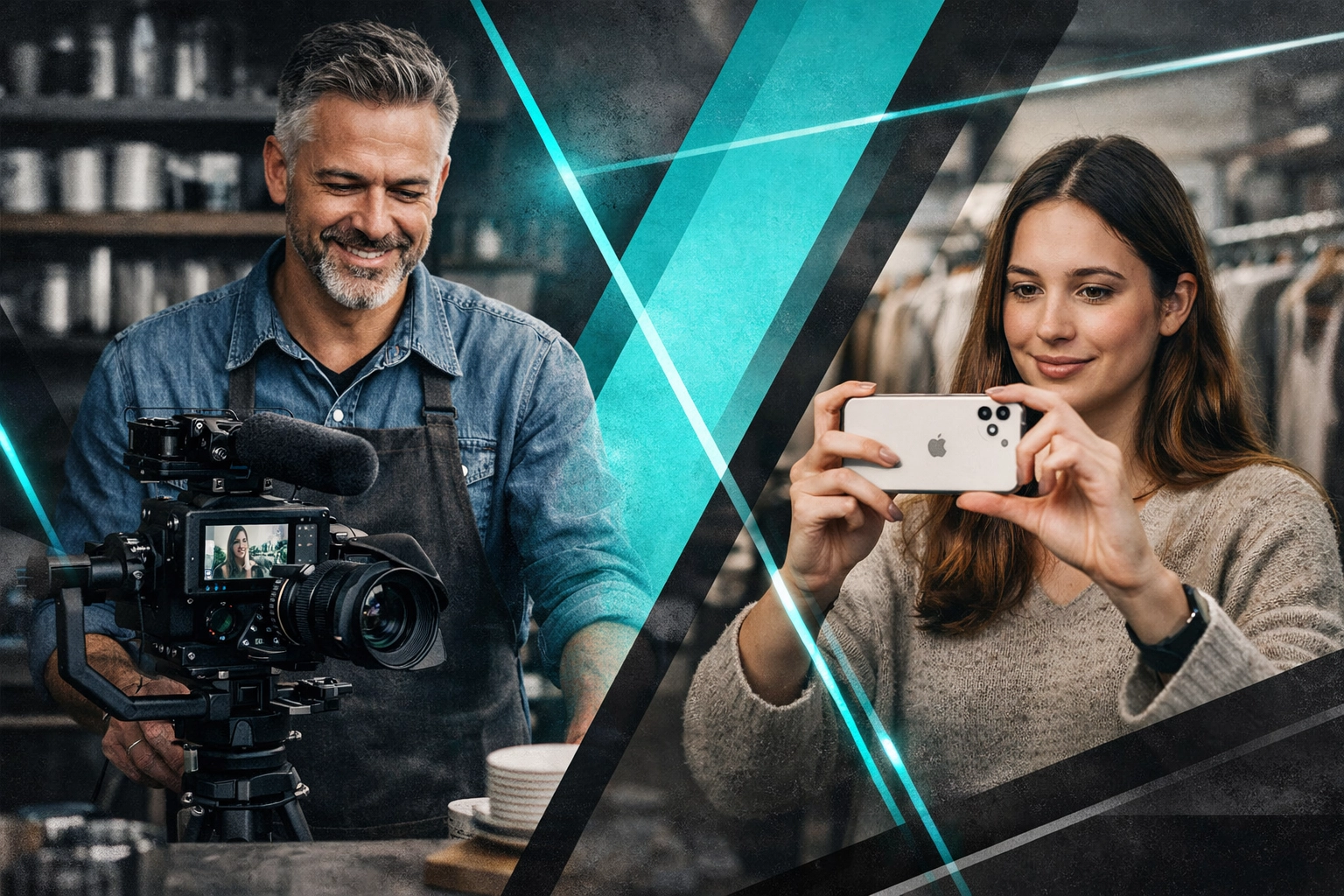
If you’re a contractor going after higher-end work, premium renovations, custom builds, commercial projects, big-ticket installs, your marketing has to look like you belong in that room.
And yes, your iPhone can shoot decent video. It can even shoot really decent video in the right conditions.
But “decent” doesn’t win premium jobs.
High-end clients (and commercial buyers) are making a fast judgment about trust, competence, and attention to detail. Video is one of the quickest ways they decide whether you’re the kind of business they want on-site, in their home, or on their project.
This post breaks down why professional video is one of the strongest tools in contractor marketing and lead generation, and why a smartphone camera usually isn’t enough if you want better leads and bigger projects.
High-end clients don’t “shop”, they screen
For budget jobs, people might compare a few quotes and pick the lowest. For premium jobs, it’s different:
- They want fewer contractors involved
- They want less risk
- They want proof you can deliver
- They want the process to feel smooth
A strong video does a job your website copy can’t do on its own: it shows professionalism. It shows systems. It shows quality control. It shows how you communicate.
That’s why professional video isn’t a “nice to have” anymore, it’s a filtering tool that attracts the right clients and repels the wrong ones (which is a win).
Your iPhone can’t consistently create a “premium” look
Phones are impressive. But they’re still phones. When you’re trying to create repeatable, reliable marketing assets (not just a lucky clip), the gaps show fast.
1) Sensor size and lighting: where phone video falls apart
A lot of contractor work gets filmed in less-than-perfect lighting:
- Basements
- Bathrooms
- Mechanical rooms
- Overcast exteriors
- Early/late-day site visits
- Indoor commercial spaces with mixed lighting
Phones have small sensors. That’s why they struggle in low light and produce grainy footage, weird colours, or blown-out windows. You can “fix” some of it, but fixing bad video is like trying to sand a crooked board straight, it’s never as clean as doing it properly in the first place.
Professional cameras + proper lighting capture clean footage on purpose, not by accident.
2) Depth and focus: the “phone look” is easy to spot
High-end marketing often has that clean, cinematic feel: the subject pops, the background is soft, and your eye knows exactly where to look.
Phones fake this effect with software. Sometimes it works. Sometimes it glitches around hair, hard edges, tools, and moving hands (which… is basically contractor video).
A pro camera can create real depth naturally, and a pro shooter can control it intentionally shot by shot.
3) Manual control and consistency
Professional marketing needs consistency across:
- Different job sites
- Different seasons
- Different staff on camera
- Different times of day
Phones offer limited real control over settings like shutter speed, white balance, and exposure. That’s why one clip looks warm, the next looks blue, and the next looks like a fluorescent swamp.
Professional video workflows lock in settings so the content looks like one brand, not a bunch of random moments stitched together.
Audio is the silent lead killer (and phones are bad at it)
Most businesses underestimate audio. But if your sound is rough, people assume the same about your work.
Common phone-video problems:
- Wind noise on outdoor clips
- Echo in garages and basements
- Voices that sound far away or muffled
- Background noise overpowering the speaker (saws, vacuums, traffic)
Yes, you can buy a mic for your phone. But then you run into:
- mic placement issues
- interference or clipping
- no proper monitoring (you don’t realize it’s bad until later)
- more “setup friction,” meaning it doesn’t get used consistently
A professional setup captures clean audio intentionally, monitors it live, and fixes it in editing. That matters if you’re filming:
- project walkthroughs
- testimonials
- “what to expect” videos
- process explanations
- high-value sales videos
If you want lead generation from video, people have to actually watch the video. Bad audio is the fastest way to make them scroll.
Professional video isn’t about being fancy. It’s about trust.
High-end clients don’t just want the end result. They want confidence in the process.
The right videos can communicate:
- how clean and organized your crews are
- how you protect the client’s home/site
- how you manage timelines and change orders
- how you handle surprises
- how you keep communication tight
That trust is what turns “just browsing” into “book a call.”
The real ROI: better leads, faster sales, higher average job value
Let’s keep this practical. The goal isn’t to win a filmmaking award. The goal is better business results.
Here’s what we typically see when contractors add real professional video to their marketing:
Better leads
Your content pre-qualifies people. If someone watches a clean project walkthrough, sees your standards, and hears how you work, you get fewer “what’s your cheapest option?” conversations.
Faster decision-making
Video answers questions before they’re asked. That shortens the sales cycle because clients feel like they already know you.
Higher perceived value
Premium video doesn’t just show the project. It signals that you run a premium operation. That supports higher pricing because the entire experience looks higher quality.
More usable marketing assets
A proper shoot can produce:
- a homepage brand video
- multiple short ads
- testimonial clips
- Instagram/TikTok/Reels content
- YouTube videos
- sales follow-up videos
- website service-page videos
A phone clip usually produces… one phone clip.
Where smartphone video still works (and where it doesn’t)
Phones aren’t useless. They’re just the wrong tool for certain jobs.
Good uses for smartphone video
- quick behind-the-scenes updates
- simple “progress clips” for Stories
- casual shop updates
- quick team moments
- raw “proof of life” content
Risky uses for smartphone video
- paid ads targeting high-end buyers
- your homepage hero video
- a flagship “about us” video
- testimonials (audio matters too much)
- detailed project walkthroughs (lighting + stability issues)
- content meant to represent premium craftsmanship
A good rule: if the video is tied to revenue (ads, website conversions, sales follow-ups), it’s worth doing professionally.
The hidden problems with iPhone-only marketing (that waste time and money)
Even if you can get “good enough” quality sometimes, the operational issues add up.
Storage and file headaches
High-quality formats eat storage fast. A few minutes can take multiple gigabytes. That leads to:
- deleting footage to make room
- losing clips
- inconsistent backups
- slower editing handoffs
Battery life and overheating
Long shoots and high-res recording drain batteries fast. Phones can also overheat and stop recording: usually at the worst possible time.
Shaky footage without extra gear
Handheld phone footage screams “DIY” unless you add stabilizers, rigs, and time. At that point, you’re basically building a mini production kit anyway: without the full benefit of a real camera system.
No repeatable system
The biggest problem: iPhone video is often dependent on who filmed it and when. That makes consistent contractor marketing hard. And consistency is what actually builds momentum.
What “professional video” should include for contractor marketing
This isn’t about showing off drones and slow-motion for the sake of it. Professional video should be built around conversion.
Here are a few formats that consistently perform well for contractors and other service businesses:
1) A brand video that clearly explains what you do
This is the “anchor” video that lives on your homepage and gets reused everywhere. It should answer:
- who you help
- what you do
- where you work
- what makes you different
- what the next step is
2) Project walkthroughs (done cleanly)
These work because they’re proof. They show details, finish quality, and scope.
3) Testimonials that don’t feel awkward
Most testimonials fail because they feel staged or sound terrible. A professional setup makes the client comfortable and captures audio that’s actually usable.
4) Process videos that reduce friction
Examples:
- “What to expect during a kitchen reno”
- “Our roofing install process”
- “How we handle dust control and cleanup”
- “What happens after you request a quote”
These reduce objections and make premium clients feel safe.
5) Short ad cuts built for paid campaigns
A 60–90 second nice video is great… but ads often need 6s, 15s, and 30s versions with strong hooks and clear calls-to-action.
How professional video plugs into lead generation (not just “content”)
Video works best when it’s part of a system, not a one-off.
A simple, effective flow looks like this:
- Video ads target your ideal service area + ideal customer
- They click to a landing page that matches the message (and includes video)
- They fill out a quote request form
- They get follow-up emails/texts that include more video (process/testimonials)
- Your sales call is with a warmed-up, qualified lead
That’s where video becomes a real lever for lead generation, not just something you post and hope for the best.
If you want this built end-to-end, that’s the kind of thing we do inside our Complete Growth Engine: strategy, creative, campaigns, landing pages, tracking, and follow-up, all built to produce measurable results. You can explore our services here: https://funkymoosedigital.ca/services
What to do if you’re not ready for a full production
Not every business needs a huge shoot tomorrow. But if you’re aiming for high-end work, you do want a plan.
Here’s a practical approach:
- Start with one flagship video (brand video or “why us”)
- Capture 1–2 strong testimonials
- Get enough project footage to build 5–10 short ad clips
- Use those clips consistently for 90 days with proper tracking
That gives you real data. Then you expand based on what actually drives leads.
A quick gut-check: does your video match your pricing?
If you charge premium rates but your video looks like:
- shaky handheld shots
- harsh lighting
- muddy audio
- random clips stitched together
- no clear message
…you’re making your own sales process harder.
Professional video doesn’t replace good work. It simply makes sure the right people see it, trust it, and take the next step.
If you’re ready to turn better video into better leads, start here: https://funkymoosedigital.ca/request-a-quote