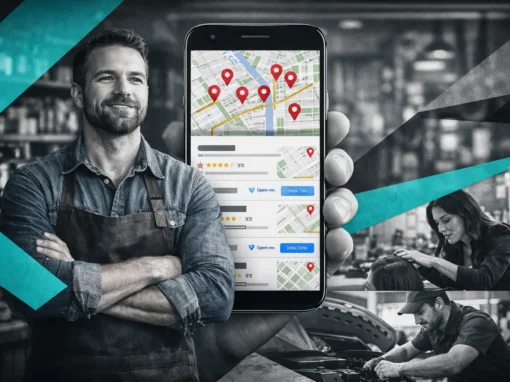
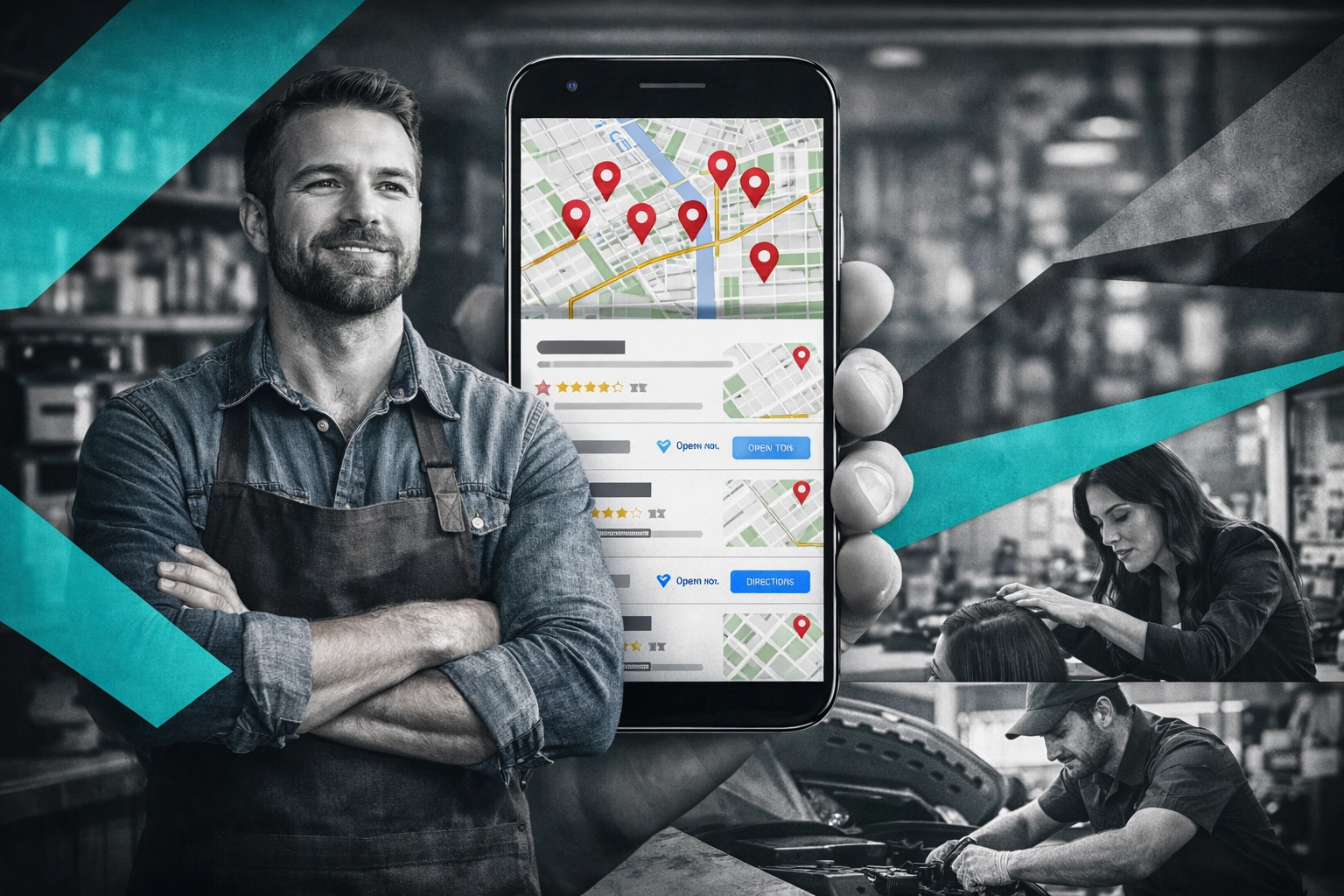
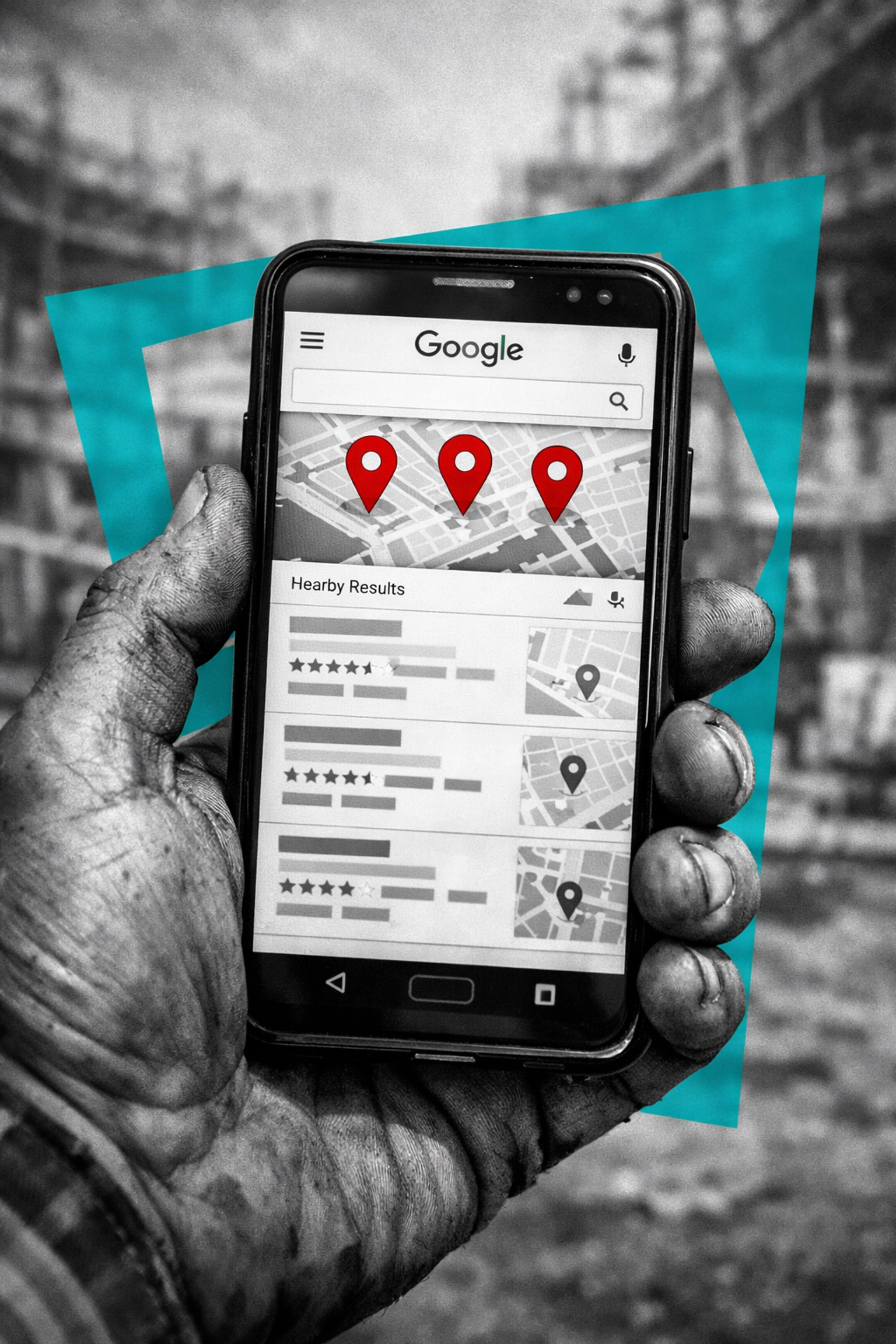
Let's be honest: when someone's furnace dies at 10 PM or their roof is leaking into the dining room, they're not scrolling through page three of Google. They're looking at the Map Pack: those three businesses that show up with the little red pins right at the top of the search results.
If you're not in that top three? You might as well be invisible.
For contractors and tradespeople, the Map Pack is the most valuable piece of digital real estate you can own. It's where people go when they need help right now, and it's where your phone should be ringing off the hook. The difference between being #1 and #4 in the Map Pack can literally be the difference between a booked schedule and scrambling for work.
So how do you get there? And more importantly, how do you stay there when every other contractor in town is trying to knock you off?
Why the Map Pack is Your Money Maker
Think about how you search when you need something local. You pull out your phone, type "plumber near me" or "roofer in [your city]," and you click on one of the first three results that pop up with a map. You're not reading blog posts. You're not comparing 15 different websites. You're looking at who's close, who has good reviews, and you're calling.
That's exactly what your customers are doing.
The Map Pack shows up for nearly every local search, and businesses that land in those top three spots get the lion's share of clicks, calls, and direction requests. It's not about being the flashiest or having the biggest marketing budget: it's about showing Google (and your potential customers) that you're the most relevant, trustworthy option in your area.
Step 1: Claim and Actually Optimize Your Google Business Profile
If you haven't claimed your Google Business Profile (GBP), stop reading and go do that right now. Seriously. It's free, and it's the foundation of everything else.
But here's where most contractors drop the ball: they claim the profile, fill in the bare minimum, and then forget it exists. That's like putting up a "We're Open" sign and then never turning on the lights.
Here's what you need to do to actually optimize your profile:
Pick the Right Category
Don't just choose "Contractor" and call it a day. Get specific. If you're a basement renovation specialist, say that. If you do commercial HVAC, make that your primary category. Google uses these categories to match you with relevant searches, so the more precise you are, the better your chances of showing up when someone needs exactly what you do.
Write a Real Description
Your GBP description isn't a place to stuff keywords like you're playing SEO bingo. Write like a human. Tell people what you do, who you serve, and what makes you different. For example: "Family-owned roofing company serving Regina homeowners for 20 years. We specialize in asphalt shingle replacement and emergency leak repairs: and we actually answer our phone."
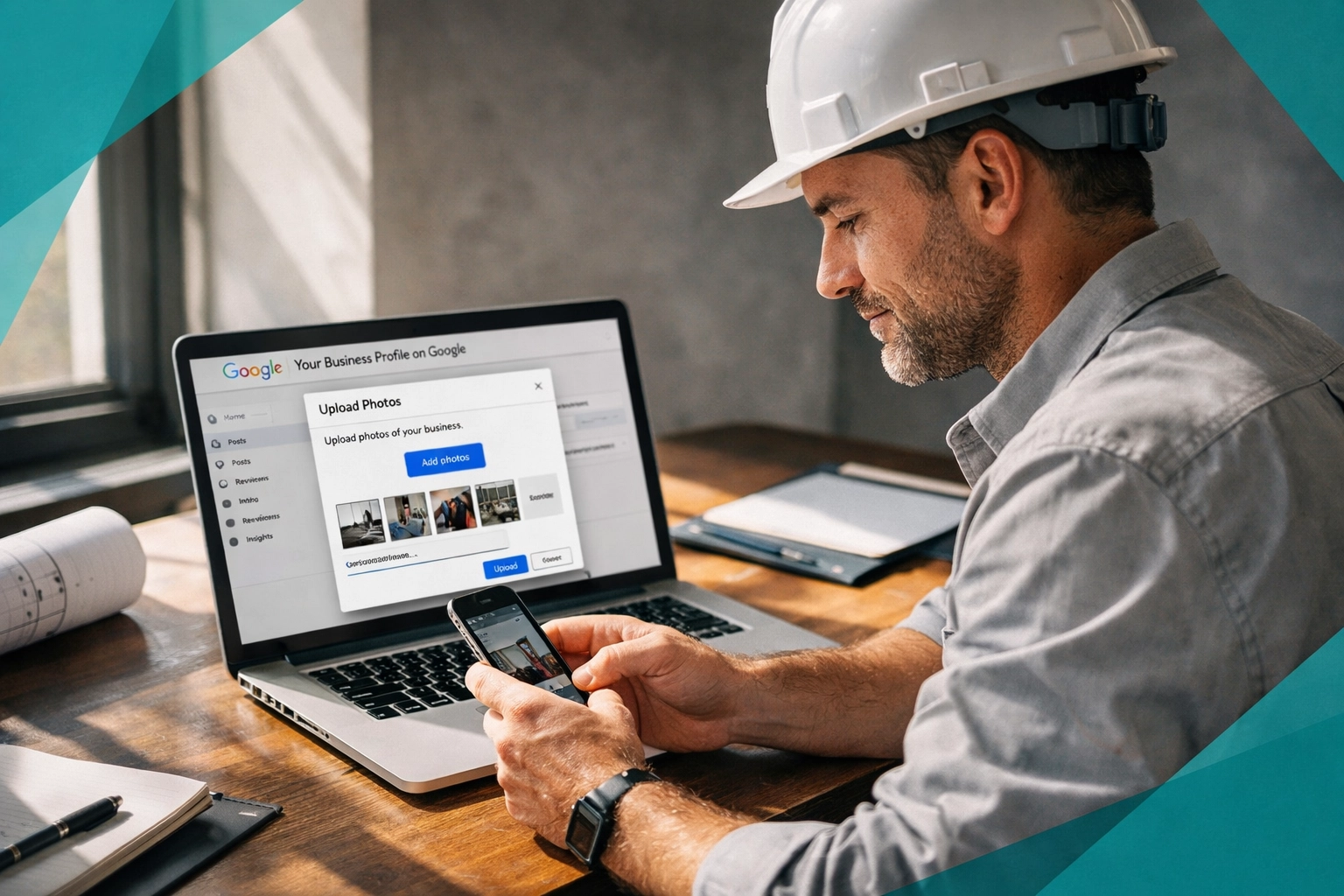
Add Photos (Lots of Them)
People want to see your work before they call you. Upload 15-20 high-quality photos: your team, your trucks, before-and-after shots, completed projects, even your shop or office. Profiles with comprehensive photo galleries see 15-20% higher engagement than those with just a logo and a blurry storefront pic.
Post Weekly Updates
Google loves active profiles. Post updates about recent jobs, seasonal tips, or special offers at least once a week. It signals to Google that you're a real, engaged business: not just a dead listing that hasn't been touched since 2019.
Step 2: Get Your NAP Consistent Everywhere
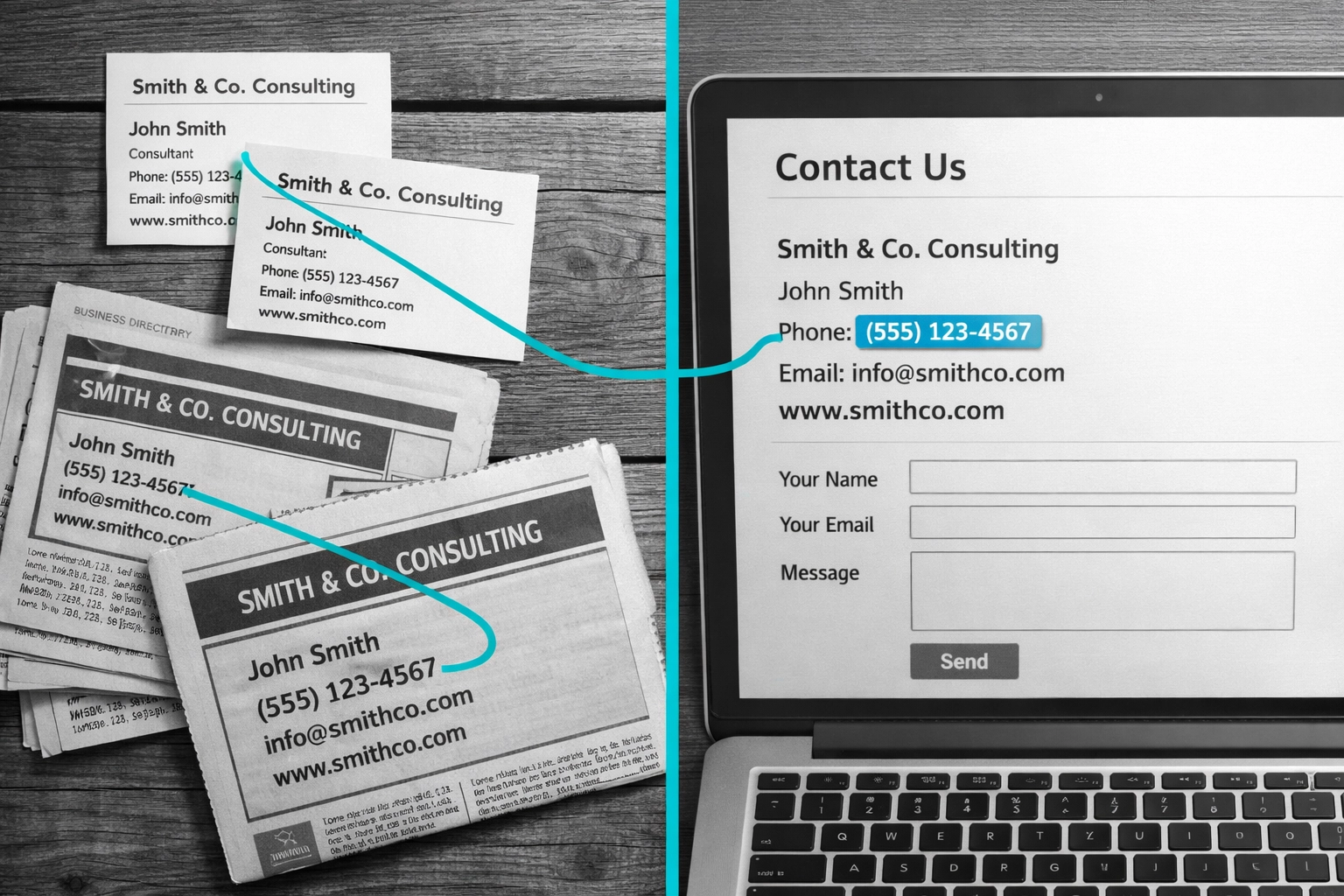
NAP stands for Name, Address, Phone Number: and Google is obsessed with it.
If your business is listed as "John's Plumbing" on your GBP, "John's Plumbing Ltd." on your website, and "Johnny's Plumbing Services" on Yelp, Google doesn't know which one is real. Inconsistent information makes you look sketchy, and it tanks your rankings.
Make sure your NAP is exactly the same across:
- Your Google Business Profile
- Your website (especially the footer and contact page)
- Any other directories or listings (Yelp, HomeStars, Yellow Pages, industry-specific sites)
Even small differences: like using "Street" vs. "St." or including a suite number in one place but not another: can confuse Google's algorithm. Consistency builds trust, and trust gets you ranked.
Step 3: Reviews Are Your Secret Weapon (But Do It Right)
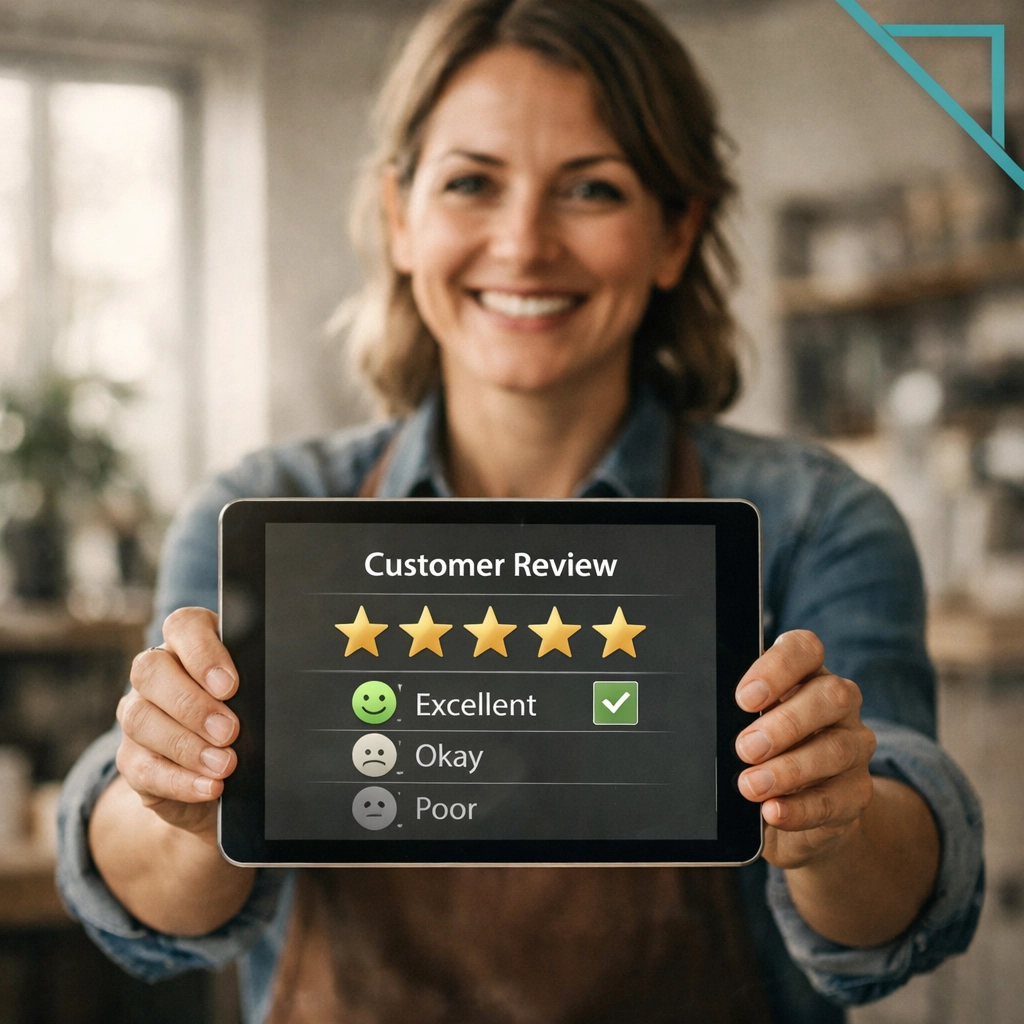
Customer reviews are a massive ranking factor for the Map Pack, and they're also the first thing people look at when deciding whether to call you. A business with 50+ recent reviews and a 4.8-star average is going to crush a competitor with 8 reviews from 2022.
But here's the thing: you can't fake it. Buying fake reviews or offering discounts in exchange for 5-star ratings will get your profile suspended faster than you can say "Google penalty."
Instead, build an organic review strategy:
- Ask happy customers for reviews right after you finish a job (when they're most satisfied)
- Make it easy: send them a direct link to your GBP review page via text or email
- Respond to every review, good or bad, to show you're engaged and you care
And don't panic if you get a bad review. How you respond matters more than the review itself. A professional, empathetic response to a 1-star complaint shows potential customers that you're reasonable and willing to make things right.
Step 4: Use Local Keywords (Without Sounding Like a Robot)
Google wants to match searchers with businesses that are relevant to their location and their need. That means you need to weave local keywords into your GBP, your website, and any content you create: but in a way that sounds natural.
Instead of keyword-stuffing nonsense like "Regina plumber Regina plumbing services Regina emergency plumber Regina," write like a human:
"We've been helping homeowners in Regina's Cathedral neighborhood with burst pipes and water heater replacements for over 15 years."
See the difference? You're still using location-specific language, but it's readable and actually helpful.
If you serve multiple areas, create separate landing pages for each neighborhood or city you cover. Each page should have unique content tailored to that specific area: mention local landmarks, neighborhoods, or common issues in that region. This tells Google exactly where you operate and helps you show up in the Map Pack for those locations.
Step 5: Build Your Website as a Local SEO Engine
Your website isn't just a digital brochure: it's a critical piece of your Map Pack ranking strategy. Here's what your site needs to do:
- Embed a Google Map on your contact or location pages with a pin at your business address
- Display your NAP clearly and consistently, ideally in the footer of every page
- Include clear calls-to-action like "Call Now" or "Get Directions" that link directly to your GBP
- Make it mobile-friendly: most local searches happen on phones, and a slow or clunky mobile experience will kill your rankings
- Add local content to your service pages: write about the areas you serve, the types of jobs you commonly handle in those areas, and why you're the best choice
If you need help building a site that actually drives leads, check out our digital marketing services.
Step 6: Monitor, Adjust, and Stay Consistent
Here's the bad news: you're not going to dominate the Map Pack overnight. It takes consistent effort over two to six months to see significant movement. But here's the good news: once you're in that top three, it's a lot easier to stay there than it was to get there.
Use Google Business Profile Insights to track your performance. Look at:
- How many people are viewing your profile
- How many are clicking to your website
- How many are calling or requesting directions
If you're getting lots of views but no calls, your profile might need better photos or a stronger description. If you're not getting views at all, you need to work on your keywords, categories, and NAP consistency.
Also, keep an eye on your competitors. Who's showing up in the Map Pack for your target searches? What are they doing well? Where are they weak? Use that intel to find quick wins and gaps you can fill.
Own Your Backyard
At the end of the day, dominating the Map Pack is about owning your local backyard. It's about making sure that when someone in your city needs what you do, your business is the one that shows up first.
Better visibility in the Map Pack means more calls. More calls mean more jobs. More jobs mean more revenue. It's really that simple.
If you're a contractor or tradesperson who's tired of watching leads go to competitors who outrank you on Google Maps, it's time to stop guessing and start optimizing. Focus on your Google Business Profile, get your NAP locked in, ask for reviews, and create local content that proves you're the go-to expert in your area.
And if you need help putting all this together: or you just want someone to handle contractor marketing tips while you focus on running jobs: that's exactly what we do at Funky Moose Digital. We help tradespeople and contractors show up, stand out, and book more work without the fluff or the jargon.