
Let’s be honest, every marketing “expert” you’ve talked to has told you something different about where to spend your advertising budget.
One guy swears by Google Ads. Another says Facebook is the only platform that matters. Your nephew who “does social media” tells you Instagram is where it’s at. And some SEO consultant wants you to wait six months to see results from blog posts.
Here’s the truth nobody wants to tell you: they’re all kind of right, and they’re all kind of wrong.
The real answer? It depends on what you do, who needs it, and how fast they need it. Let’s break down the big three options in contractor marketing so you can actually make a smart decision instead of just throwing money at the first salesperson who calls.
Google Ads: The “I Need It Now” Button
Think of Google Ads as the digital version of someone flipping through the Yellow Pages with a leaking pipe flooding their basement. They’re not browsing. They’re not thinking about it. They’re actively searching for help right now.
When someone types “emergency plumber Regina” or “roof repair near me” into Google, they’ve already decided they need a contractor. They’re just deciding which one to call.
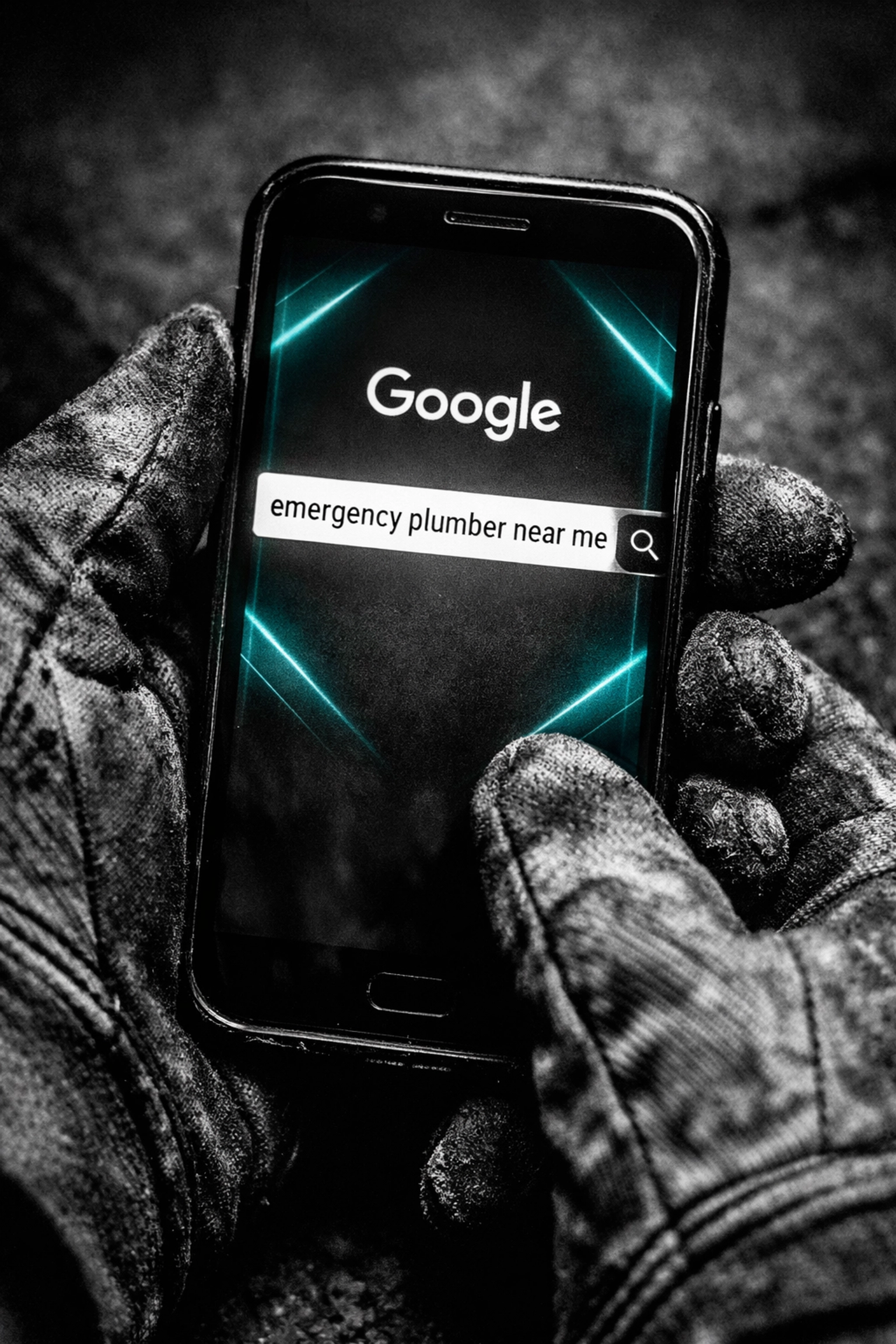
That’s why Google Ads work so well for trades that handle urgent problems, plumbing emergencies, furnace breakdowns, storm damage repairs. You’re not convincing anyone they need your service. You’re just making sure your phone number shows up when they’re ready to hire someone.
The numbers don’t lie: Google Ads for contractors typically cost around $4.66 per click. Sounds expensive, right? But here’s the thing, those clicks convert at a much higher rate because people are ready to buy. When someone searches “concrete contractor Saskatoon,” they’re not window shopping. They’ve got a project in mind and a budget ready to go.
The downside? Everyone knows this works, so competition is fierce. If you’re in a city with 50 other roofers, you’re all bidding on the same keywords. That drives up costs fast. But if you handle emergency work or high-ticket projects, one job can pay for months of ads.
Google Ads work best when:
- You handle emergency or urgent services
- Your customers know exactly what they need
- You’re willing to pay premium prices for high-intent clicks
- You need leads today, not three months from now
Meta (Facebook/Instagram) Ads: The “Hey, Remember Me?” Strategy
Meta Ads (that’s Facebook and Instagram combined) work completely differently. Nobody wakes up scrolling Instagram thinking, “Man, I really need to hire a deck builder today.”
Instead, someone sees your before-and-after photos of a kitchen renovation while they’re checking what their high school friends are up to. They think, “Wow, that’s nice. We should probably do something about our kitchen eventually.”
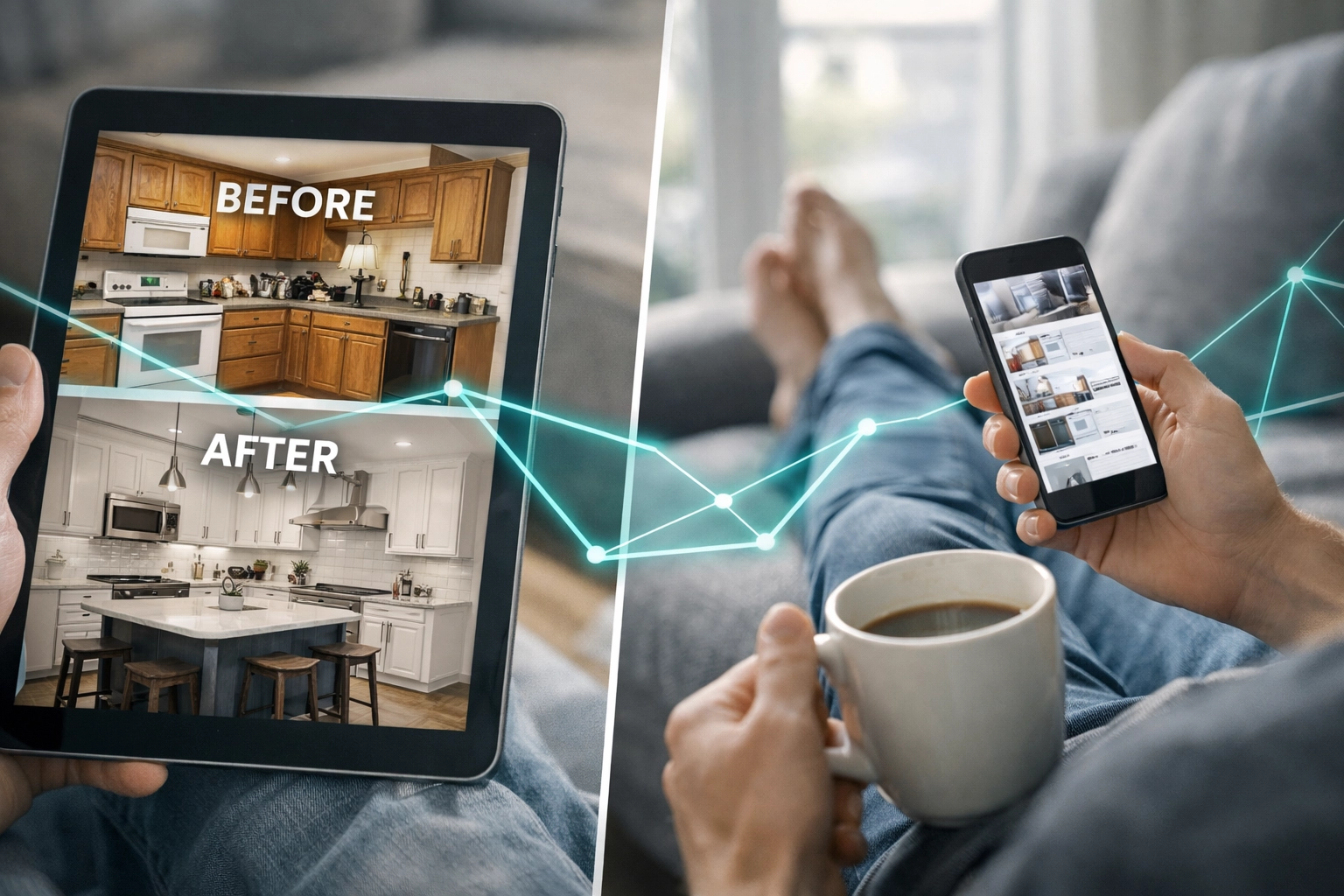
Meta Ads don’t capture demand, they create it. You’re planting seeds.
This makes Meta Ads perfect for services with longer decision cycles. Nobody impulse-buys a $40,000 basement renovation. They think about it for weeks or months. Meta Ads keep you top-of-mind during that consideration phase so when they’re finally ready to get quotes, they remember your company.
The best part? Meta Ads are cheaper. You’re paying around $1.88 per click instead of $4.66 on Google. And if you’ve got visual work to show off, renovations, landscaping, custom builds, Instagram is basically built for you.
But here’s the catch: Conversion rates are lower because people aren’t actively shopping. You might get tons of likes and comments, but turning those into signed contracts takes more work. You need follow-up systems, email sequences, and patience.
Meta Ads work best when:
- Your work is visual and impressive
- You’re targeting planned projects (renovations, landscaping, custom homes)
- You want to build brand awareness on a tighter budget
- You’ve got a system to nurture leads over time
Think of it this way: Google Ads are for people searching “emergency furnace repair.” Meta Ads are for people who see your post about energy-efficient furnaces and think, “Huh, mine is pretty old. Maybe I should look into that next spring.”
SEO: The “Owning Your Backyard” Strategy
SEO is the marathon, not the sprint. It’s about showing up in Google search results without paying for every click.
When someone searches “best roofing contractor in Moose Jaw” and your website shows up at the top of the page, not in the ads section, but in the regular results, that’s SEO at work. You’re not paying Google every time someone clicks. You’ve just built up enough authority and relevance that Google trusts you enough to recommend you.
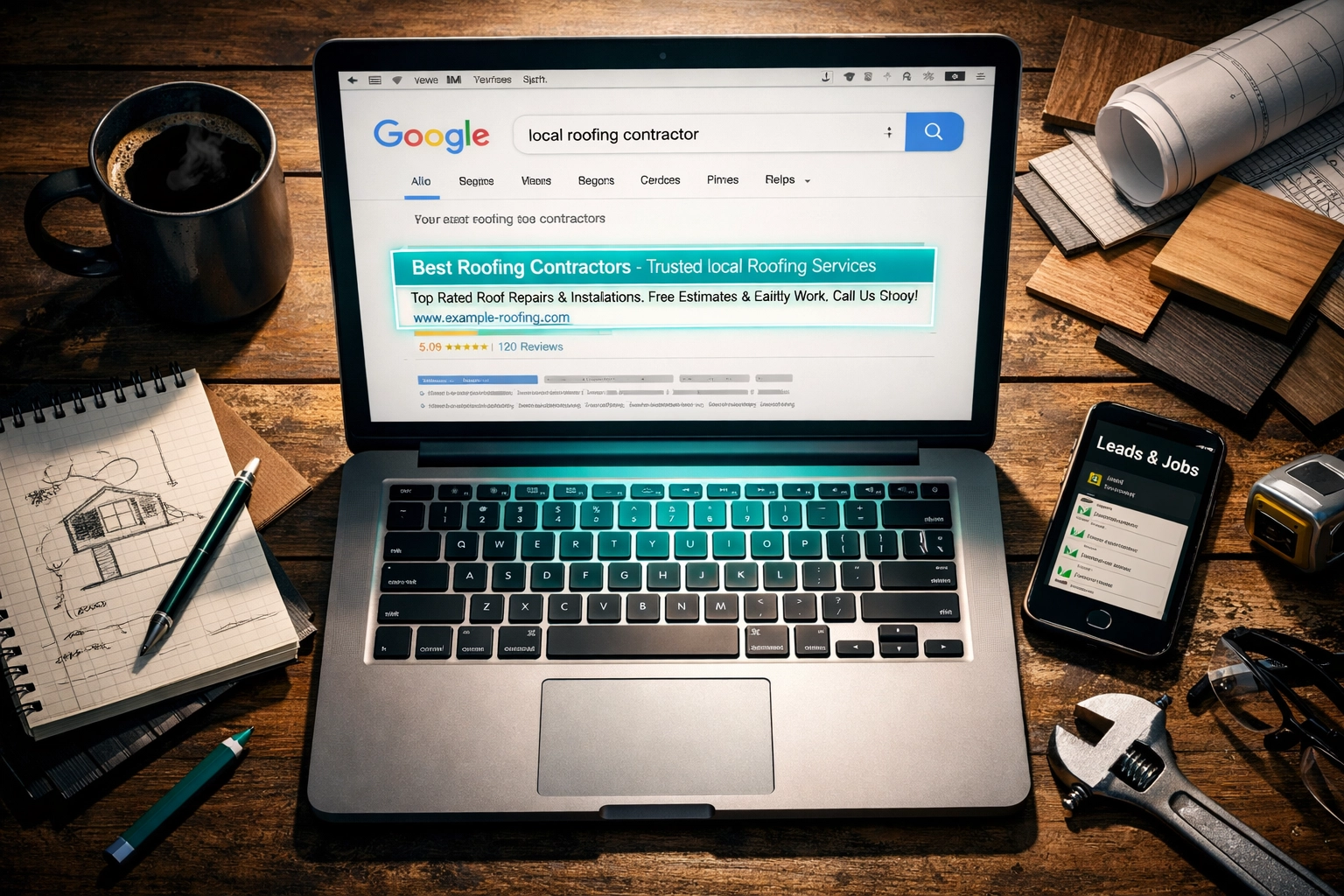
The upside is obvious: free traffic that keeps coming month after month. Once you rank well, you’re collecting leads without the ongoing ad spend.
The downside? It takes time. Like, months. Sometimes a year or more for competitive terms. You need good content on your website, reviews from happy customers, a mobile-friendly site that loads fast, and consistent effort. It’s not a “set it and forget it” thing, it’s more like tending a garden.
But here’s why smart contractors invest in SEO anyway: compounding returns. Your Google Ads stop the second you stop paying. Your SEO ranking keeps working for you 24/7 once it’s established.
SEO works best when:
- You’re thinking long-term (6-12 months minimum)
- You want leads without ongoing ad costs
- You’re willing to create helpful content and collect reviews
- You serve a specific local area consistently
Think of SEO as owning your piece of the internet instead of renting it. It takes longer to build, but once you’ve got it, nobody can just outbid you to take it away.
So What Should You Actually Do?
Here’s the part where I’m supposed to tell you to pick one and go all-in, right?
Nope.
The contractors who crush it with digital marketing use all three, but the order matters.
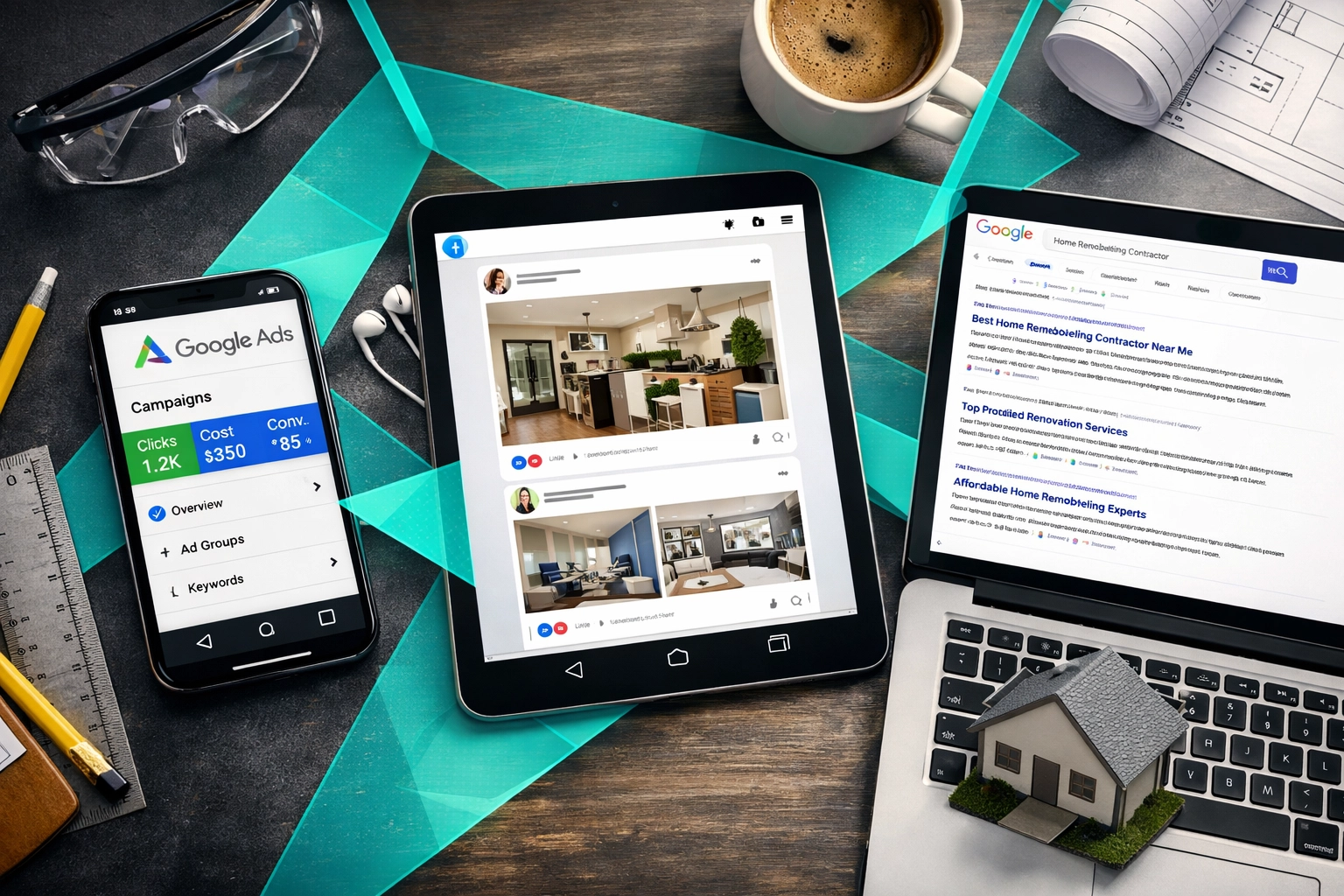
The simple strategy we use: Google first, then Meta retargeting
- Start with Google Ads to capture high-intent searches.
This is where you pick up the “I need someone” traffic. When a homeowner searches “fence contractor near me” or “furnace repair Regina,” they’re not looking for inspiration—they’re looking for a company to call. Google is the fastest way to get in front of people who are already in hiring mode. - Then use Meta (Facebook/Instagram) to retarget and stay top-of-mind.
Once someone clicks your Google ad or visits your site, they usually don’t book instantly. They compare options, check reviews, ask their spouse, look at pricing, and then… life happens.
Retargeting is how we close that gap. After they find you on Google, we essentially “follow them around” on Facebook and Instagram with gentle reminders—plus visual proof like before/after photos, short project videos, testimonials, and “here’s what it looks like when we’re on-site” content.
Not in a creepy way. More like: “Hey, still need that deck built? Here’s what our work looks like. When you’re ready, book a quote.”
That combination works because:
- Google captures demand (people actively searching)
- Meta retargeting builds trust and recall (people seeing your work repeatedly)
- You’re visible in more than one place while they make the decision
And everyone, yes, everyone: should be working on SEO in some capacity. Even if it’s just making sure your Google Business Profile is updated and you’re asking happy customers for reviews. That’s free marketing that never stops working.
The best approach? Use Google Ads to get found first. Then use Meta retargeting to keep showing up until they’re ready to book. Use SEO to build a foundation so you’re not 100% dependent on paid ads forever.
Bottom line: Contractor marketing isn’t about picking the “best” platform. It’s about understanding how real people actually find and hire contractors: and being visible at every stage of that journey.
Your schedule doesn’t fill itself. But with the right mix of Google Ads, Meta Ads, and SEO working together, you can stop chasing leads and start having them come to you.
Need help figuring out which mix makes sense for your business? That’s literally what we do at Funky Moose Digital. Let’s talk.