
You wake up, check your Google Business Profile, and notice something odd. That glowing five-star review from last week's bathroom reno? Gone. The one from the garage door install two months ago? Also gone. You didn't delete them. The customers didn't delete them. So what the hell happened?
Welcome to 2026, where Google's AI-powered review moderation has contractors scratching their heads and watching legitimate reviews vanish into thin air. If you're in the trades, plumbing, electrical, roofing, HVAC, or any home service, this isn't just annoying. It's costing you jobs.
Let's break down why this is happening and, more importantly, how to build a review strategy that actually sticks around.
Google's Review Purge Is Real (And Getting Worse)
Google isn't deleting reviews to mess with you. They're fighting a massive fake review problem, and their solution is an AI system that's gotten extremely aggressive.
Here's what's happening: Google's algorithms now analyze every review for authenticity. They look at the reviewer's account history, when the review was posted, how detailed it is, and whether the language matches patterns of fake reviews. The problem? The AI isn't perfect. It's deleting legitimate reviews alongside the fake ones.
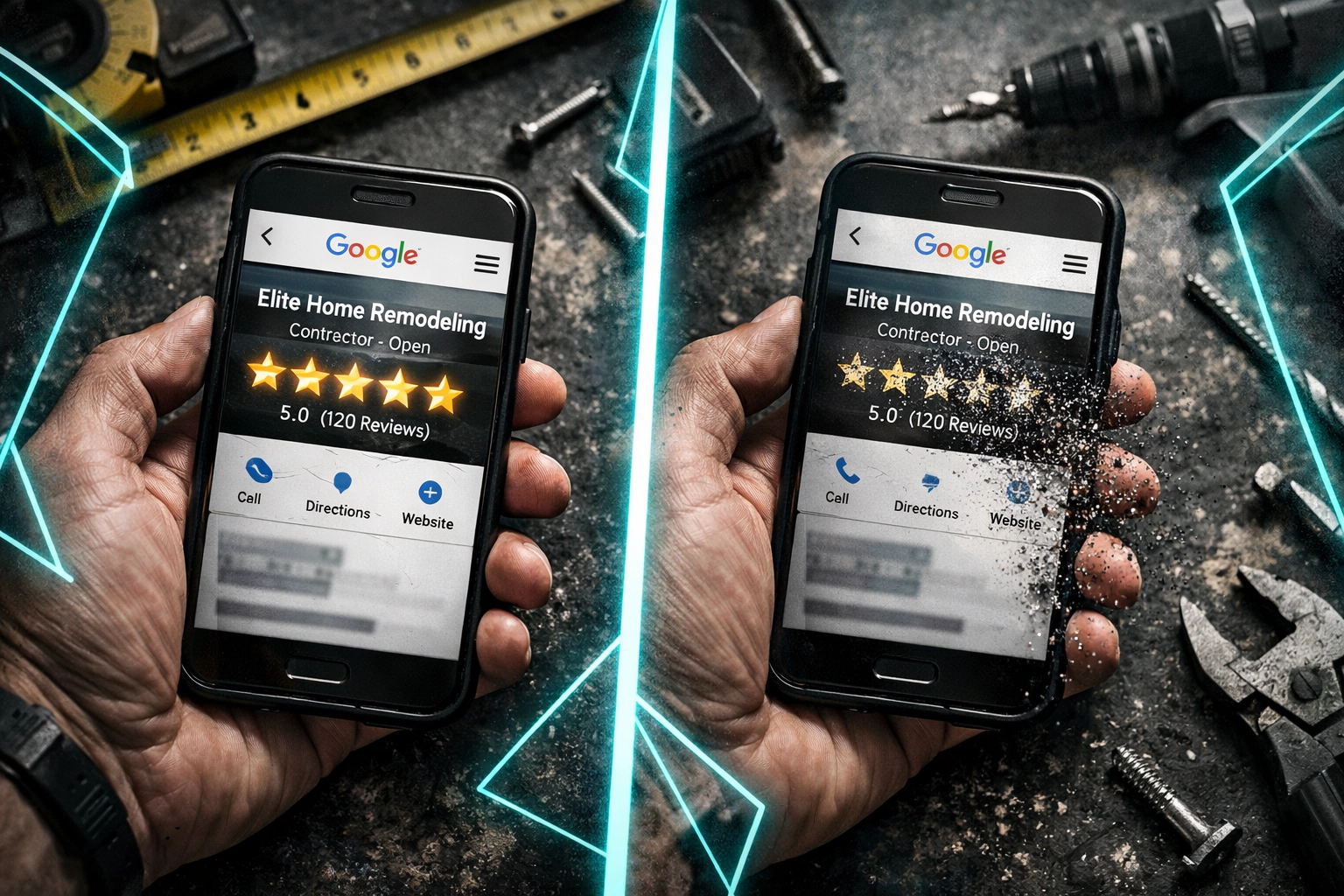
And get this, five-star reviews are getting hammered the hardest. About 42-45% of all deleted reviews are five-star ratings. Why? Because fake review operations almost exclusively post five-star reviews to boost businesses. So Google's AI assumes that if it looks too good, it might be fake.
For contractors, this is brutal. You do great work, you get a happy customer to leave a review, and Google's robot decides it looks "suspicious" and deletes it within weeks.
The Mistakes Contractors Make That Trigger Deletion
Most contractors don't realize they're accidentally sabotaging their own reviews. Here are the biggest mistakes that get reviews flagged and deleted:
1. Asking customers to leave reviews while you're still on-site
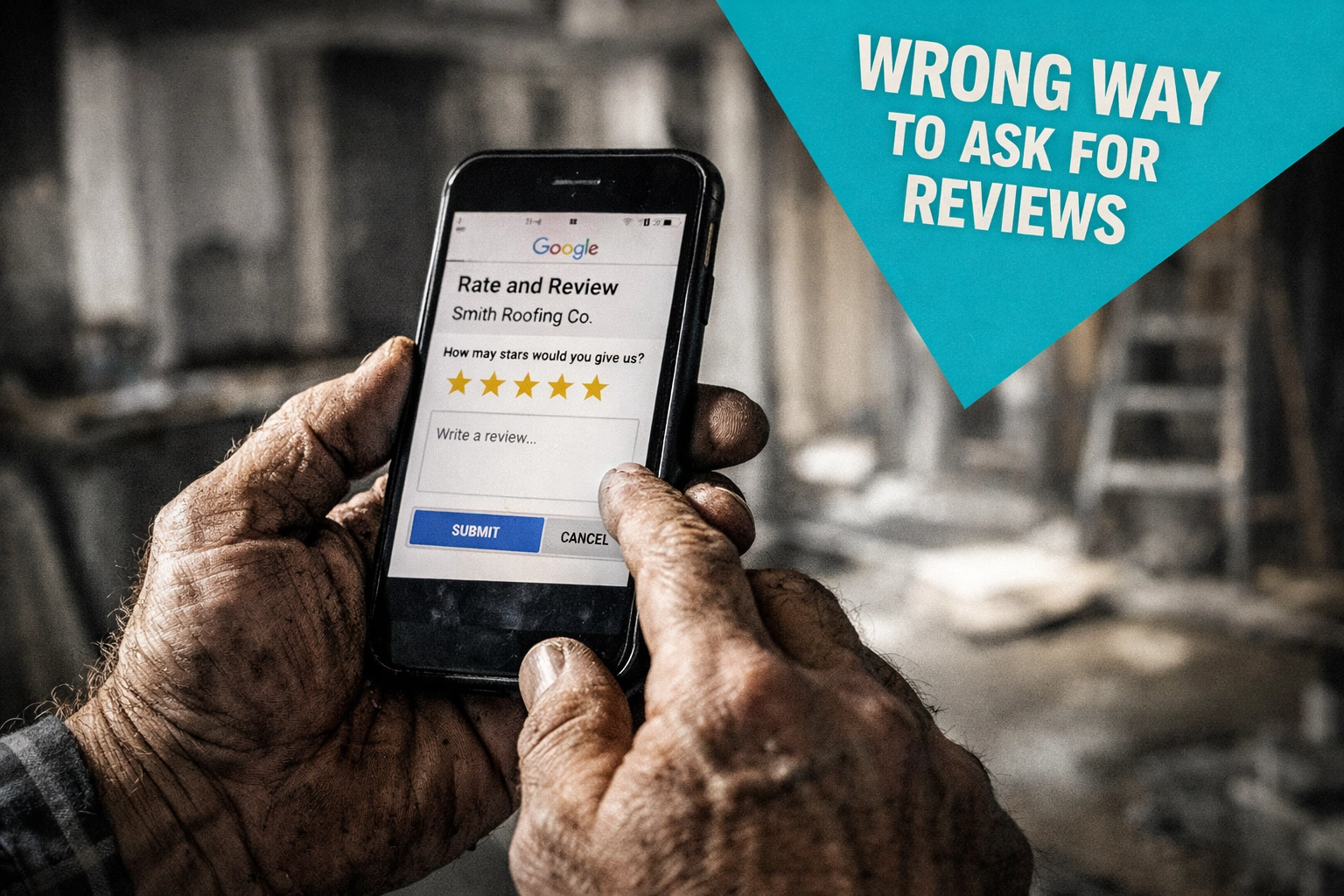
This one's common. You finish the job, the homeowner's thrilled, and you hand them your phone to leave a review right there. Big mistake. When a review is posted from your Wi-Fi network or your device, Google's AI sees that as suspicious. It looks like you wrote it yourself.
2. Getting a bunch of reviews all at once
You finish three jobs in a week, all three customers leave reviews within 24 hours. To Google, that sudden spike looks like you bought a batch of fake reviews. Even though they're legit, the timing triggers red flags.
3. Generic, short reviews
"Great service! Highly recommend!" might feel good, but Google's AI sees it as low-effort and potentially fake. Reviews that lack specific details about what you actually did are much more likely to get deleted.
4. New reviewer accounts
If a customer creates a Google account just to leave you a review and has never reviewed anything else, that's a red flag. Google assumes it's a fake account you set up.
5. Mentioning incentives
If a review says anything like "They gave me a discount for leaving this review" or "Got 10% off for my feedback," it's getting deleted immediately. Incentivized reviews violate Google's policies, period.
How to Get Reviews That Actually Stick
Alright, enough doom and gloom. Here's how to build a review strategy that survives Google's AI scrutiny in 2026:
Ask for Reviews the Right Way
Timing matters. Don't ask for the review on-site. Wait a day or two after the job is complete, then send a follow-up email or text. This gives the customer time to leave the review from their own device, on their own Wi-Fi, when they actually have time to think about what they want to say.
Make it easy, include a direct link to your Google Business Profile review page. But don't hand them your phone. Ever.
Encourage Detail and Specificity
When you ask for a review, guide your customers toward specifics. Instead of "Can you leave us a review?" try something like:
"Hey [Customer Name], glad we could get that furnace sorted out for you. If you have a minute, we'd really appreciate it if you could share what the experience was like, maybe mention what the issue was and how we helped fix it. Here's the link: [your Google review link]"
The more detail, the better. Reviews that mention specific problems you solved, the names of your crew members, or the timeline of the project are way more likely to survive. They look authentic because they are authentic.

Spread Out Your Review Requests
Don't go on a review-gathering binge. If you finish five jobs this week, ask two customers for reviews now and spread the rest out over the next few weeks. Consistent, steady review velocity looks natural. A sudden flood looks suspicious.
Target Long-Time or Repeat Customers
Reviews from Google accounts that have been active for years and have a history of leaving legitimate reviews carry way more weight. If you've got repeat customers or people you've worked with multiple times, they're gold. Their reviews are significantly less likely to get deleted.
Respond to Every Review (Yes, Even the Bad Ones)
Here's something most contractors miss: responding to reviews actually protects them from deletion.
Google's research shows that reviews which get personalized, thoughtful responses from the business owner are less likely to be flagged. Why? Because genuine engagement signals to Google that this is a real customer relationship, not a fake account.
When someone leaves you a good review, don't just say "Thanks!" Write a real response. Mention something specific about their project. For example:
"Thanks so much, Karen! We're really glad we could get that leaky basement sorted out before the spring thaw. Enjoy that dry space!"
And yes, respond to negative reviews too. Keep it professional, acknowledge their concerns, and offer to make it right. Potential customers read those responses: and so does Google's AI.

This Is Part of the Foundation: The Built To Last Blueprint
At Funky Moose Digital, we built the Built To Last Blueprint specifically for contractors who want a marketing system that doesn't fall apart when the algorithms change. And reputation management? That's the foundation.
Your Google reviews aren't just nice-to-haves. They directly impact your Local Service Ads rankings, your Google Maps visibility, and whether someone calls you or your competitor. If your reviews keep disappearing, your entire digital marketing for contractors strategy takes a hit.
That's why we bake reputation strategy into every Blueprint we build. It's not enough to just "get more reviews." You need a system that gets the right reviews, protects them, and uses them to feed into your SEO, your ads, and your lead generation.
Track Your Reviews Like You Track Your Jobs
You wouldn't finish a job and never follow up on payment. Don't treat your reviews that way either.
Set a reminder to check your Google Business Profile weekly. If you notice reviews disappearing, document it. Screenshot everything. If you see a pattern: like all your five-star reviews from the last month vanishing: you can appeal to Google, though honestly, their support isn't great.
Better strategy? Build your review process to avoid deletions in the first place. Focus on quality over quantity. Ten detailed, authentic reviews from real customers with established Google accounts are worth way more than fifty generic one-liners that Google deletes in six weeks.

The Bottom Line
Google's AI isn't going away. If anything, it's going to get more aggressive. The days of quickly racking up five-star reviews by handing customers your phone are over.
But here's the good news: if you play by the rules and focus on getting genuine, detailed feedback from real customers, your reviews will stick. And when they stick, they do serious work for your business: boosting your rankings, building trust, and bringing in more leads.
This is exactly the kind of strategy we build into every contractor's marketing plan through the Built To Last Blueprint. Because online marketing for tradespeople isn't about hacks or shortcuts anymore. It's about building systems that last: even when Google changes the rules.
Need help building a reputation strategy that survives 2026 and beyond? Let's talk. We've been helping contractors in Saskatchewan navigate this stuff since day one, and we know what works.