TL;DR: Google is phasing out Call-Only ads and removing direct call buttons from organic Local Pack results to prioritize high-intent interactions through Responsive Search Ads. To stay ahead, contractors must invest in high-converting landing pages and advanced call tracking to ensure they aren’t losing leads to a more complex customer journey.
Google is making it harder to get "cheap" one-click calls to force better tracking and higher-quality interactions. By sunsetting the Call-Only ad format and adding extra steps to organic local listings, Google is pushing businesses toward a strategy that requires a website visit before a phone call. This means your website strategy is now the most critical part of your lead generation funnel, as you can no longer rely on users bypassing your site to call you directly from a search result.
What exactly happened to Call-Only ads?
If you’ve been running Google Ads for a few years, you likely loved Call-Only ads. They were simple: a user searches for a "plumber near me" on their phone, clicks your ad, and their phone dialer opens immediately. No website needed, no distractions, just a direct line to a potential job.
As of February 2026, Google has officially disabled the creation of new Call-Only ads. If you already have them running, you aren't in the clear for long; Google has announced that all existing Call-Only ads will stop serving by February 2027.
The replacement is something called Responsive Search Ads (RSAs) with "call assets." While this sounds like a small name change, it’s a fundamental shift in how you pay for leads. RSAs are designed to show a mix of headlines, descriptions, and buttons. Instead of just a phone number, Google now wants to show your website link alongside that number.
The goal for Google is automation. They want their AI to decide whether a user is more likely to call you or read your "About Us" page first. For contractors who just want the phone to ring, this feels like an unnecessary hurdle, but it’s the new reality of digital marketing.
Why is the "Call" button missing from Google Maps?
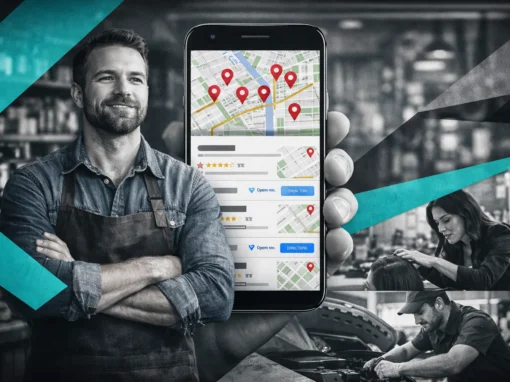
It isn't just the paid ads that are changing. You might have noticed that when you search for a local business on your phone, the familiar "Call" button in the "3-Pack" (the map results) is starting to disappear.
Previously, a user could see three local roofers, hit the call button on the one with the best reviews, and be talking to a salesperson in seconds. Now, Google is requiring users to click into the Business Profile first. Only after they’ve seen your full profile, your photos, your recent updates, and your full address, do they get the option to click the call icon.
Why would Google add an extra step to a process that was working fine? It’s about data and monetization. By forcing users to click into the profile, Google gathers more data on user intent. More importantly, it creates a stark contrast between free organic results and paid results. If you look at Google Local Services Ads (LSAs), those prominent "one-click" call buttons are still there. Google is effectively moving the "easy button" behind a paywall.
How Responsive Search Ads change the game for contractors
Since you can no longer just run a phone number and hope for the best, you have to get comfortable with Responsive Search Ads. These ads are dynamic. You provide Google with up to 15 headlines and 4 descriptions, and Google’s AI mixes and matches them to see what performs best.
For a renovation contractor, this means you can't just say "Call for a Quote" and call it a day. You need to provide headlines that mention your specific services, your service area, and your unique selling points.
The big catch is the "Call Asset." This is the part of the ad that allows the user to click and call. However, because it’s now an "asset" attached to a regular search ad, the user has a choice: they can click the phone number, or they can click the headline and go to your website.
If your website looks like it hasn't been updated since 2012, or if it’s slow to load, you’re going to lose that lead. When someone clicks your headline instead of the phone number, your website has to do the heavy lifting of convincing them to call you once they land there.
Why landing pages are no longer optional
In the old world of Call-Only ads, you could get away with a mediocre website because many of your leads never actually saw it. In 2026, that safety net is gone.
If Google is pushing users toward your website, you need dedicated landing pages that are built for conversion. A landing page isn't just your homepage; it’s a specific page designed to answer the exact question the user asked Google.
If someone searches for "emergency roof repair," and they click your ad, they shouldn't land on a page talking about your company history. They should land on a page that says "24/7 Emergency Roof Repair – Call Now."
At Funky Moose Digital, we focus heavily on website strategy because we know that an ad is only as good as the page it sends people to. If you’re spending $50 a click but sending people to a page that doesn’t load, you’re just lighting money on fire.

Tracking your leads: Quality over quantity
One of the biggest frustrations with these changes is that call tracking becomes more complex. When someone calls directly from an ad, it’s easy to track. When they click to your website, browse three pages, and then call, tracking that back to the specific keyword they typed into Google requires more sophisticated tools.
This is where "Quality over Quantity" comes in. Google’s AI thrives on data. If you can tell Google which phone calls turned into actual jobs and which ones were just telemarketers, the AI will get better at finding you more of the good stuff.
This requires implementing dynamic number insertion (DNI) on your website. This technology swaps out the phone number on your site based on how the user found you. If they came from a Google Ad, they see one number; if they came from SEO, they see another. This allows you to see exactly which marketing efforts are actually making your phone ring.
The rise of the "High-Intent" customer
While these changes might seem like a headache, there is a silver lining. By adding an extra click or requiring a visit to your website, Google is effectively "filtering" your leads.
The person who is willing to click through to your business profile, look at your work, read a review, and then call is much more likely to be a high-quality lead than someone who just clicked the first phone icon they saw. These "high-intent" customers have already done their research by the time they pick up the phone. They know who you are, they’ve seen your work, and they are much closer to saying "yes" to a quote.
For businesses like concrete companies or specialized trades, this shift can actually lead to a higher closing rate, even if the total number of calls drops slightly. You’re trading "junk calls" for real opportunities.

How to adapt your strategy right now
You don't have to wait until 2027 to fix your strategy. In fact, if you wait, your competitors who adapted early will already own the top spots. Here is what you should be doing today:
- Audit your current ads: If you are still running Call-Only campaigns, start testing Responsive Search Ads with call assets immediately. See how the cost per lead compares.
- Optimize your Google Business Profile: Since users are being forced to click your profile before calling, make sure your profile is perfect. Add high-quality photos, respond to every review, and use the "Posts" feature to show you are active.
- Fix your mobile website speed: Most of your leads are coming from mobile phones. If your site takes more than three seconds to load, people will bounce back to Google before they ever see your phone number.
- Implement advanced tracking: Use a tool like CallRail or integrate your CRM with Google Ads so you can see the true ROI of your phone calls.
- Focus on conversion-centric design: Make sure your phone number is "sticky" at the top of the screen on mobile devices so it’s always one tap away, no matter how far down the page they scroll.
Let's get your phone ringing again
The landscape of Google Ads is always shifting, and 2026 is proving to be a year of big transitions for the trades. While it’s annoying to have to change a system that was working, these updates are designed to favor businesses that provide a better user experience and better information to their customers.
If you’re feeling overwhelmed by the transition from Call-Only ads to RSAs, or if you’ve noticed a drop in your lead volume recently, we can help. We specialize in helping contractors navigate these exact types of changes without losing their shirts.
Whether you need a new lead generation strategy or a website that actually converts visitors into customers, we’ve got your back. Request a quote today, and let's make sure your business stays ahead of the curve.
Key Takeaways
- Call-Only ads are dying: They are being replaced by Responsive Search Ads, which require a more comprehensive approach to headlines and landing pages.
- The "Extra Click" is real: Google is removing direct call buttons from organic results, making your Google Business Profile and website more important than ever.
- Website quality is king: Since more users will visit your site before calling, your mobile speed and landing page design will directly impact your lead volume.
- Tracking must evolve: To maintain a good ROI, you need to track calls back to specific ads and keywords using dynamic number insertion.
- Quality beats quantity: While getting a call might take more steps now, the leads you do get are likely higher-intent and more ready to buy.