TL;DR: Responding to potential clients within minutes dramatically increases your chances of booking a job before they move on to a competitor. Speed-to-lead is the most effective way to double your revenue without increasing your marketing budget.
The Five-Minute Window is Your Golden Ticket. Research shows that responding to a lead within five minutes makes you ten times more likely to convert that prospect into a customer compared to waiting just thirty minutes. In the home services industry, homeowners typically contact three to five contractors at once, and the first one to provide a professional response wins the job nearly 80% of the time. If you wait until you’re off the roof or finished with dinner to call back, you’ve likely already lost the job to a faster competitor.
Why do homeowners drop off so quickly?
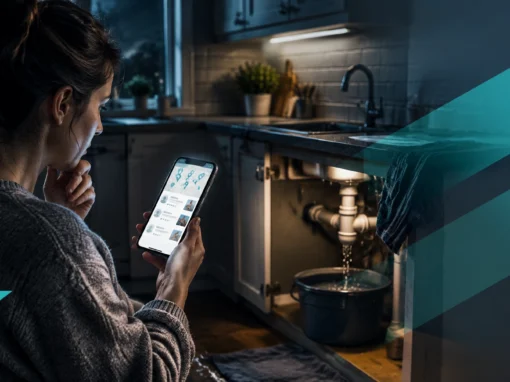
We live in an "on-demand" world. When a homeowner notices a leak in their ceiling or a crack in their driveway, they aren't just looking for a service, they are looking for peace of mind. Their anxiety is at its peak the moment they hit "submit" on your contact form. If they don't hear from you immediately, that anxiety doesn't go away; it just moves to the next name on the Google search results page.
Most homeowners drop off because they feel ignored. Even a thirty-minute delay can feel like an eternity when someone is actively trying to spend money to solve a problem. They assume that if you are slow to answer a simple inquiry, you’ll probably be slow to show up for the job or finish the project. Speed isn't just about efficiency; it’s a signal of professionalism and reliability.
Furthermore, the "shopping" phase is often a race. A homeowner might have five tabs open on their laptop. They fill out five forms. The first contractor to text or call them effectively ends their search. Once they are engaged in a conversation with you, they stop looking at the other tabs. If you’re the second or third person to call back, you’re not competing for the job, you’re competing for a "thanks, but I already found someone" response.
What is the actual financial cost of a slow response?
Let’s look at the numbers, because this is where the "cost" of being slow becomes painfully clear. Imagine you spend $1,000 a month on lead generation and you get 20 leads. If your response time is sluggish, say, a few hours or the next day, you might only reach and book 2 of those people. That’s a $500 cost per acquisition.
Now, imagine you use pipeline management tools to respond within 60 seconds. Suddenly, you’re talking to 18 of those 20 people because you caught them while they were still looking at your website. Even with the same sales skills, you’re likely to book 6 or 8 of those jobs simply because you got to them first. Your cost per acquisition just dropped to $125 or $166.
By failing to respond quickly, you are essentially throwing away a huge portion of your marketing budget. You’ve already done the hard work of building a brand and getting them to your site. To fall down at the one-yard line because of a delayed phone call is a mistake that costs thousands of dollars in lost gross profit every single month. For many trades businesses, fixing speed-to-lead is the fastest way to grow without needing to find "better" leads.
How can you manage leads while on a job site?
This is the biggest hurdle for owner-operators and small teams. You’re in the middle of a pour, you’re under a sink, or you’re on a ladder. You can’t exactly drop a power tool to answer a text. However, "being busy" is no longer an acceptable excuse in the eyes of the consumer.
The secret is to stop relying on your manual memory and start relying on a system. Most successful contractors use a mobile-first workflow. This means having an app on your phone that pings you with a specific, loud notification the second a lead comes in.
If you truly can't talk, you need an automated "safety net." A simple automated text that says, "Hey! This is Mark from Funky Moose Digital. I saw your request for a quote. I’m currently on a job site but I can call you in exactly 20 minutes: does that work?" is infinitely better than silence. It acknowledges the homeowner, sets an expectation, and: most importantly: stops them from calling the next person on the list.

What are the best tools for automation?
You don’t need a degree in computer science to set up a system that works for you. The goal is to create a seamless bridge between a lead coming in and a conversation starting. Here are the tools that move the needle:
- CRM (Customer Relationship Management): You need a central hub where every lead from Facebook, Google, and your website lands. This prevents leads from getting lost in your "General" email folder.
- Automated SMS Replies: As soon as a lead is captured, your system should send a text message. Texting has a nearly 100% open rate and is much less intrusive than a cold call while the homeowner is at work.
- Instant Call Bridging: Some high-end systems will actually call you the moment a form is filled out. When you pick up, it says, "You have a new lead from [Name]. Press 1 to connect." You press 1, and it immediately dials the lead. This puts you on the phone with them within 30 seconds of them hitting submit.
- AI Chatbots: While "AI" can sound like a buzzword, a simple AI assistant on your site can answer basic questions about your service area or project types and then book a site visit directly onto your calendar.
At Funky Moose Digital, we focus on making these tools straightforward and rugged for tradespeople. You don't need a thousand features; you just need the ones that help you book more work.
Does your website design impact your speed-to-lead?
Absolutely. If your website is confusing or takes too long to load, people will leave before they even become a lead. But more importantly, if your contact forms are too long, you’re creating friction.
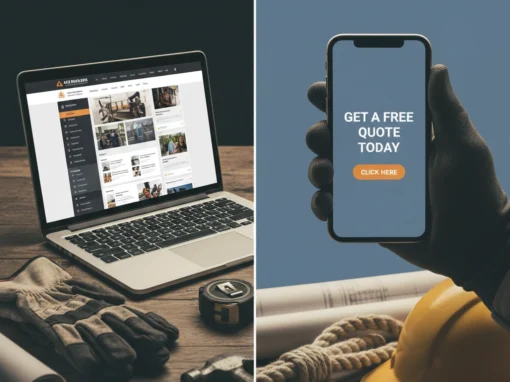
A "Speed-to-Lead" optimized website focuses on the "Quick Quote" or "Fast Callback" button. You want to capture the name and phone number as fast as possible. Don't ask for their life story or the exact square footage of their attic in the first step. Save the detailed discovery for the phone call. The goal of the website is to start the clock, not to finish the sale.
We always recommend that our clients check their website on mobile devices regularly. If the "Call Now" button is hard to hit with a thumb, or if the form is wonky on a phone screen, you’re killing your response time before it even starts.
How to train your team for a "Speed First" culture
If you have an office manager or a sales team, speed-to-lead needs to be their primary metric. It’s not just about how many calls they make, but how fast they make them.
Start by tracking your current response times. You might think you’re responding in 15 minutes, but the data often shows it’s closer to two hours. Once you have a baseline, set a goal. Reward the team when the average response time stays under five minutes for the week. When your team understands that every minute of delay is literally burning company money, the culture shifts from "I'll get to it later" to "I need to handle this now."

Book a Consultation
Stop letting high-quality leads slip through the cracks. If you're tired of playing phone tag and losing jobs to the "fast guy" down the street, we can help you build a system that responds for you. At Funky Moose Digital, we specialize in helping contractors automate their lead flow so they can focus on the work they love.
Key Takeaways
- The 5-Minute Rule: Responding within 5 minutes makes you 10x more likely to close the deal compared to responding in 30 minutes.
- Automation is Essential: Use a CRM and automated SMS to ensure no lead goes unnoticed while you're busy on a job site.
- First to Respond Wins: 78% of customers buy from the first responder; speed is a more significant competitive advantage than price for many homeowners.
- Stop the Search: A fast response acknowledges the customer's needs and prevents them from reaching out to your competitors.
- Low Friction Lead Capture: Keep website forms short and mobile-friendly to get the lead's contact info into your system as quickly as possible.