
If you’ve spent any time in the trades lately, you know that the "old way" of getting leads: word of mouth and a yellow pages ad: is long gone. Even traditional Google Ads (the ones with the little "Sponsored" tag and a bunch of text) are starting to feel like the senior citizens of the digital marketing world.
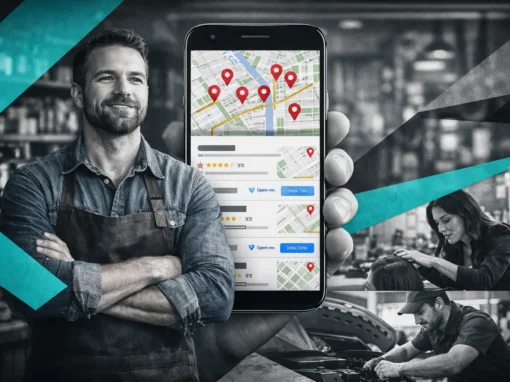
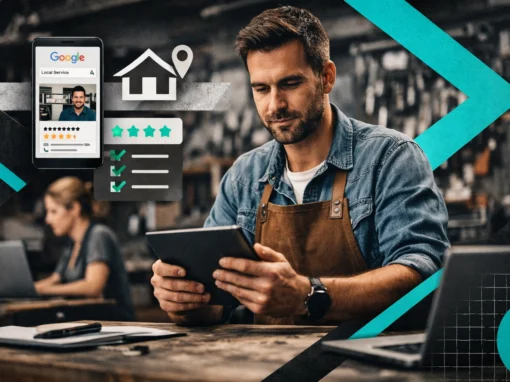
Enter Google Local Services Ads (LSAs). You’ve seen them: those little boxes at the very top of the search results, usually featuring a green checkmark and a “Google Guaranteed” or “Google Screened” badge. For a few years, these were the "easy button" for lead generation. You’d sign up, pass a background check, and the phone would start ringing.
But it’s March 2026, and the game has changed. Google has turned its LSA platform into a "data-hungry" monster. If you aren’t feeding it the right information, your ranking will tank, and your competitors will be the ones getting the high-value bookings.
Let’s break down everything you need to know about LSAs in 2026, including why they aren’t always the right fit for every Canadian city.
What Exactly are Local Services Ads (LSAs)?
Local Services Ads are separate from traditional Google Ads. Instead of paying every time someone clicks on your website (PPC), you pay per lead. A lead is usually a phone call or a direct message from a potential customer through the ad itself.
For renovation contractors or roofing contractors, this is a massive advantage. You aren't paying for "window shoppers" who just want to see your gallery; you're paying for people who are ready to talk business.
The hallmark of the LSA is the Google Guaranteed badge. This tells the customer that Google has vetted you. If a customer isn't happy with the work, Google may even reimburse them (up to a certain lifetime limit). It’s an instant hit of trust that most other marketing channels can’t replicate.

The Canadian Catch: Why Funky Moose Digital Doesn't Always Offer Them
Before we dive into the technical details, we have to address the elephant in the room: availability.
Here at Funky Moose Digital, we are straightforward about what works and what doesn't. While LSAs are incredible in major hubs like Toronto, Vancouver, or Calgary, they aren’t widely available in every nook and cranny of Canada.
Google rolls these out city-by-city and industry-by-industry. If you’re a plumber in a small town in Saskatchewan or an electrician in a remote part of the Maritimes, the LSA platform might not even be an option for you yet. This is exactly why we don't offer it as a blanket service for everyone. We refuse to sell you a dream that the technology can't support in your specific backyard.
If you’re curious if your city qualifies, the best move is to request a quote or check out our industries page to see where we’re currently seeing the most success.
Why the 2026 Rules are "Data-Hungry"
In the early days, LSA rankings were mostly about who was closest to the searcher and who had the most reviews. In 2026, the algorithm has evolved. Google now uses a "closed-loop" data system. They don't just want to know that you got a call; they want to know what happened after the call.
1. The CRM Connection
The days of running your business out of a paper notebook are officially over if you want to rank on Google. Google’s algorithm now thrives on offline data. By linking your CRM (like Jobber, ServiceTitan, or Housecall Pro) to Google’s Data Manager, you tell Google which leads turned into actual sales.
When Google sees that a specific lead turned into a $10,000 roofing job, it learns to find more people like that customer. If you don't feed Google this data, the algorithm essentially operates in the dark, and your "cost per lead" will likely skyrocket because Google is guessing instead of knowing.
2. Response Time is a Ranking Factor
Google is obsessed with the user experience. If a customer calls three businesses from the LSA section and you’re the one who doesn't pick up, Google notices.
In 2026, your response time is a primary ranking factor. If you consistently miss calls or take hours to reply to messages, Google will stop showing your ad in the top three spots. They would rather show a competitor who answers within two rings.

Mastering the New Ranking Game
If you want to dominate the top of the search results, you have to play by the new rules. Here is how you feed the beast:
Proximity Still Rules
Google still favors proximity. If someone is searching for a "plumber near me" and they are standing two blocks from your office, you have a high chance of showing up. However, proximity alone won't save a business with bad data habits. You need to ensure your service areas are precisely mapped in your LSA dashboard. Don't just check off "all of Ontario": be specific about the zones where you actually want the work.
High-Octane Reviews
It's not just about the number of stars anymore; it's about the recency and the content. Google’s AI now reads your reviews to see if they match the services you offer. If someone leaves a review saying, "They did a great job on my concrete driveway," and you are bidding on concrete leads, Google gives you a boost for that specific keyword.
If you're struggling with reviews, it might be time to look at your overall digital marketing strategy to see where the bottleneck is.
License and Insurance Verification
This sounds basic, but in 2026, Google has become much more aggressive about "expiring" your ads the moment your insurance or trade license lapses. They now perform automated checks. If your paperwork isn't up to date, your leads will vanish overnight.
The Shift to "Maximize Leads" Bidding
Previously, many contractors used a "Max Per Lead" strategy, where they told Google, "I'll pay $50 for a lead, and not a penny more."
In 2026, we’ve seen that the "Maximize Leads" bidding strategy almost always wins. Why? Because Google’s AI has more data than you do. It knows which searchers are likely to book a job and which ones are just "kickin' the tires." By using Maximize Leads, you're allowing Google to bid higher on the high-quality leads and lower on the junk.
It takes about 30 days for the algorithm to "learn" your business. During this month, you might see some volatility, but once it has enough data, the quality of leads usually stabilizes.

Is it Worth It for Your Trade Business?
LSAs are a powerful tool, especially for high-urgency trades like HVAC, plumbing, and emergency restoration. However, they are just one piece of the puzzle. If your website isn't optimized for mobile (check out our thoughts on mobile optimization), or if your landing pages are clunky, you're still going to lose money.
For businesses like dog trainers or music venues, LSAs might not be the primary focus, but for the heavy-hitting trades, they are essential.
How to Get Started (The Right Way)
- Check Availability: See if your city and trade are eligible for the Google Guaranteed or Screened badge.
- Clean Up Your Data: Ensure your Google Business Profile and website information are identical. Any discrepancy can slow down the verification process.
- Integrate Your CRM: Don't let your data sit in a silo. Connect it to Google so the algorithm knows when you've made money.
- Audit Your Response Process: Who answers the phone? If it’s you while you’re under a sink or on a roof, you might need a virtual receptionist. Speed is life for LSAs.
- Monitor Your Disputes: Not every lead is a good lead. If you get a "wrong number" or someone outside your service area, you can dispute the charge with Google to get your money back. In 2026, this also helps train the AI on what not to send you.
Final Thoughts
Google Local Services Ads in 2026 are no longer a "set it and forget it" platform. They are a high-performance engine that requires constant data fuel.
If you’re feeling overwhelmed by the technical requirements or if you're not sure if LSAs are even available in your corner of Canada, we’re here to help. At Funky Moose Digital, we specialize in helping contractors navigate these "data-hungry" rules without the fluff.
Check out our FAQ page for more common questions, or listen to our Business Banter Podcast where we talk about the real-world challenges of growing a business in the digital age.
Ready to see how we can help your business grow? Contact us today and let’s get to work.