TL;DR: Homeowners search in stages, from urgent phrases like “emergency plumber near me” to cost questions, review checks, quote comparisons, and searches for your company name. Your Google presence, website, landing pages, and follow-up process need to answer the question they have at that exact moment: “Can this business solve my problem, and can I trust them in my home?”
What homeowners need at every stage
The short answer: Homeowners are not simply looking for the cheapest contractor; they are looking for reasons to feel safe and confident. Clear service pages, recent reviews, local information, visible experience, straightforward pricing guidance, and fast communication all reduce uncertainty. This is why effective digital marketing for contractors is built around the customer’s decision process, not just a list of services.
What do homeowners search during an emergency?
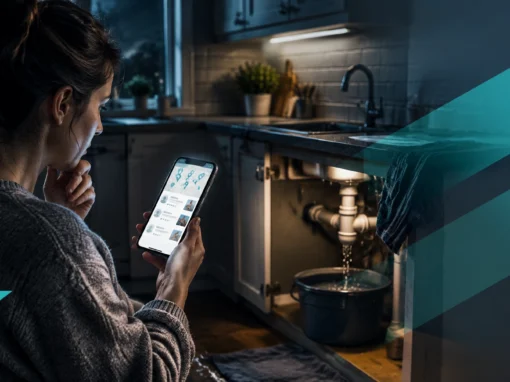
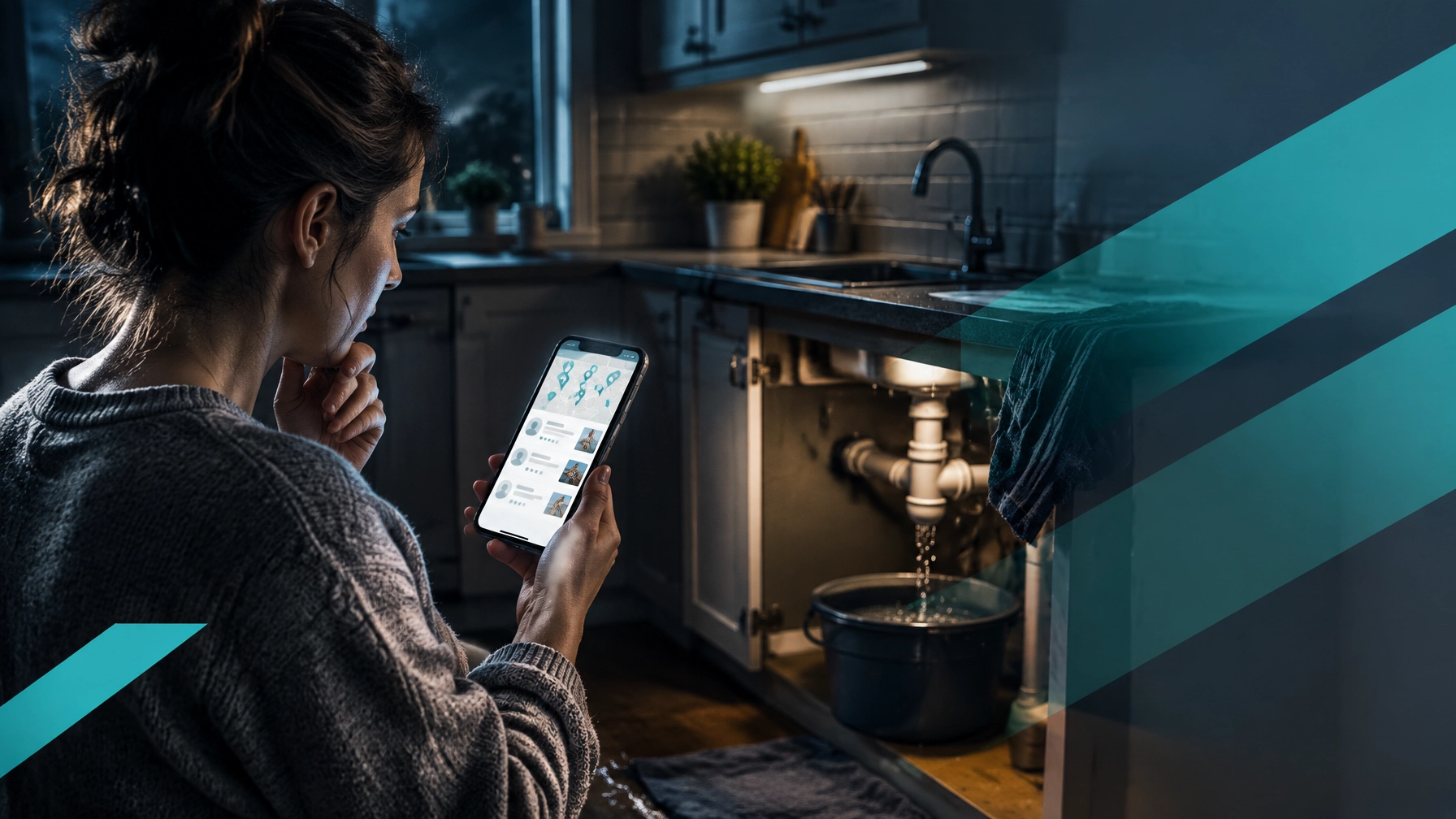
Picture this: it is 11 p.m., a pipe has burst, water is spreading across the basement floor, and the homeowner reaches for their phone.
They might search:
- “Emergency plumber near me”
- “24-hour plumber near me”
- “Water leak repair [city]”
- “Emergency HVAC repair”
- “Furnace stopped working tonight”
At this stage, they are not ready to read your company history. They need to know three things immediately:
- Do you handle this exact problem?
- Do you serve this area?
- Can I reach you right now?
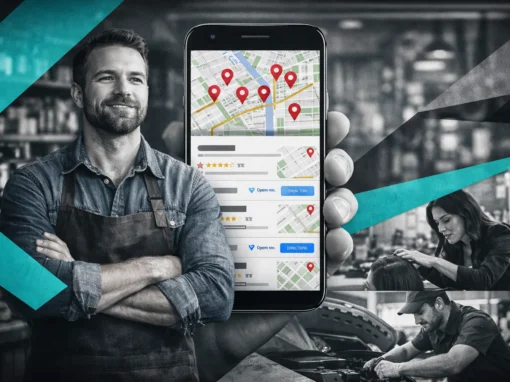
Your Google Business Profile should show the correct phone number, service area, hours, categories, and recent reviews. Google explains that a Business Profile helps local customers find a service business through Google Search and Maps, while also allowing businesses to display photos, services, reviews, and contact information.
Your website should make the next action obvious. Put the phone number near the top of the page, explain whether you offer emergency or same-day service, and use a clear button such as “Call Now” or “Request Emergency Service.”
A generic homepage creates extra work for someone who is already stressed. A dedicated emergency plumbing or HVAC landing page gives them a faster answer. That is one reason our landing pages for contractors focus on one service, one audience, and one clear next step.
What does an emergency search mean for lead generation?
Emergency searches usually show high intent. The person has a problem now, but urgency does not automatically mean they will call the first company they see.
They still look for signs that the business is legitimate:
- A real local phone number
- Clear service areas
- Recent customer reviews
- A professional website
- Evidence that the business handles similar jobs
- A simple way to get help
That combination provides emotional safety. The homeowner wants to feel that someone capable is coming to their home, not an unknown person who may arrive late, charge unpredictably, or make the problem worse.
Why do homeowners search “how much does a furnace cost” before contacting anyone?
Not every homeowner is dealing with an emergency. Many start researching weeks or months before they are ready to hire.
Typical searches include:
- “How much does a furnace cost?”
- “Furnace replacement cost [city]”
- “AC installation cost”
- “How much does a new roof cost?”
- “Best water heater for a family of four”
- “How long does a bathroom renovation take?”
These searches are not necessarily asking for an exact price. Homeowners are trying to understand whether the project fits their budget and what questions they should ask contractors.
A service page or helpful article should explain the factors that affect price, such as:
- The size and condition of the home
- The type and quality of equipment or materials
- Labour and installation requirements
- Permits or inspections
- Access to the property
- Removal of old equipment
- Warranty and maintenance options
You do not need to publish a fixed price for every job. In many cases, a realistic range and a clear explanation are more useful than “contact us for pricing” with no further information.
This is also where competence bias comes into play. Homeowners often use visible signs of organization and knowledge as shortcuts for judging whether a business is competent. A contractor who explains the process clearly appears more capable than one whose website only says, “We do quality work.”
For example, a landscaping company can explain what affects the cost of a retaining wall. An electrician can outline what is involved in installing an EV charger. A roofing company can explain the difference between a repair, replacement, and preventative inspection.
These answers attract people earlier in the buying process and help them remember your business when they are ready to request a quote.

Why do homeowners check reviews from the driveway?
A homeowner may search for a contractor on their laptop, find two or three options, and then do the most important research later, standing in their driveway with a phone.
They search:
- “[Company name] reviews”
- “[Company name] complaints”
- “[Company name] phone number”
- “[Company name] BBB”
- “[Company name] photos”
- “[Company name] service area”
This is a brand search. The homeowner already knows your name, but they are checking whether you are real, active, local, and safe to hire.
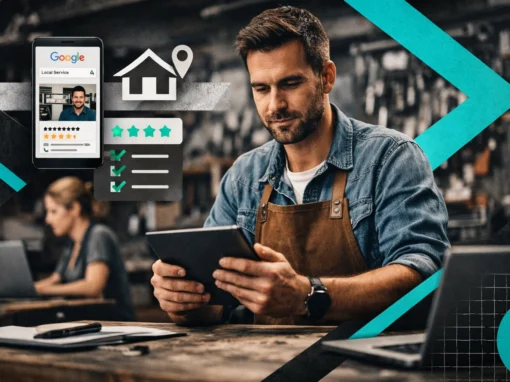
Your Google Business Profile matters here because it may be the first thing they see. Make sure it includes:
- Accurate contact details
- Current hours
- A complete service description
- Recent project photos
- Responses to reviews
- A clear list of services
- A link to the correct page on your website
Review quantity matters, but review detail matters too. A review that says “Great job” is positive. A review that explains how the contractor arrived on time, protected the floors, explained the repair, and cleaned up afterward gives future customers much more useful information.
Those details answer the emotional questions behind the search:
- Will they show up?
- Will they respect my home?
- Will they explain what they are doing?
- Will they communicate clearly?
- Will I regret hiring them?
This is why Google Business Profile photos and reviews are not just decorative extras. They help a homeowner picture what it will be like to work with you.
Why do homeowners compare two or three quotes?
For planned work, homeowners often contact multiple contractors. They may search:
- “Best roofing company near me”
- “Compare HVAC quotes”
- “How many quotes should I get for a renovation?”
- “Questions to ask a plumber”
- “Contractor estimate checklist”
Comparing quotes does not always mean they want the lowest price. They are often comparing confidence.
One contractor sends a vague text with a number. Another provides a written estimate with the scope of work, materials, timeline, warranty details, and payment expectations. The second contractor may not be cheaper, but they look more prepared.
Your website should support that comparison process before the estimate is even sent. Explain:
- What happens after someone requests a quote
- How quickly you usually respond
- Whether estimates are written
- What is included
- What can change the final price
- How scheduling works
- What customers can expect during the job
A clear process reduces uncertainty and makes it easier for a good lead to move forward.
Your quote process also needs to continue after the first contact. Some homeowners are ready to hire immediately. Others need time to compare options, speak with a partner, or arrange financing. A simple CRM and pipeline system helps you track those opportunities and follow up without relying on memory.

What does a contractor’s website need to answer?
At every search stage, your website should answer the same basic questions in plain English:
Can you do this specific job?
Do not force visitors to guess whether you handle furnace replacements, panel upgrades, emergency leaks, or full kitchen renovations. Give each important service its own focused page.
Do you serve this location?
List the cities, towns, neighbourhoods, or service areas you actually cover. A homeowner should not have to call just to find out whether you work in their area.
Do other customers trust you?
Show reviews, project photos, testimonials, certifications, and relevant experience where they support the decision. Keep the information current.
What happens next?
Tell visitors whether they should call, request an estimate, book an inspection, or send photos of the problem. One clear CTA is usually better than five competing buttons.
Will you communicate clearly?
This is where your copy matters. Avoid vague claims such as “unmatched quality” unless you explain what that means in practice. Say how you work, what customers can expect, and how you handle common concerns.
These are practical online marketing tips for tradespeople, but they also reflect how people make decisions under uncertainty. Clear information helps customers feel emotionally safe, while organized presentation gives them evidence that your business is competent.
How can contractors turn these searches into more leads?
A useful lead-generation system connects each search moment:
- Google Ads or local search puts your business in front of people looking for a solution.
- A focused service page or landing page answers the specific question behind the search.
- Reviews, photos, and clear process information reduce doubt.
- A phone call or form turns interest into a lead.
- Fast follow-up through a CRM keeps the opportunity from going cold.
- Pipeline tracking shows which leads become estimates and booked jobs.
This is how to get more leads as a contractor without treating every click as a success. The goal is not more traffic by itself. The goal is more qualified conversations with people who need the work, understand your value, and are comfortable taking the next step.

Next steps: make your online presence match the customer’s questions
If your website only says what you do, it is leaving out most of the information homeowners need before they hire.
Review your business from the customer’s perspective:
- Search your main service and city.
- Check what appears in Google.
- Look at your Business Profile on a phone.
- Read your reviews as if you were hiring someone.
- Visit your website through a service page.
- Try to request a quote without searching for the button.
- Check what happens after you submit the form.
If the process feels unclear to you, it probably feels risky to a potential customer.
Funky Moose Digital helps trades businesses connect Google Ads, conversion-focused landing pages, website copy, and CRM follow-up into one practical lead-generation system. Start a conversation to talk through where homeowners are finding you, where they are dropping off, and what could help turn more searches into booked jobs.
Key Takeaways
- Homeowners search in stages: emergency, research, reviews, comparison, and brand verification.
- Your Google Business Profile needs accurate information, recent reviews, current photos, and clear contact options.
- Service pages and landing pages should answer the exact question behind the search instead of sending everyone to a generic homepage.
- Homeowners use clear communication and organized processes as signs that a contractor is competent and safe to hire.
- The best contractor marketing connects search visibility, strong pages, fast response, and consistent CRM follow-up.