TL;DR: Local SEO is more critical for contractors in 2026 than ever before, but the tactics have shifted toward AI-readiness and high-frequency engagement. Winning today requires treating your Google Business Profile like a live storefront rather than a set-it-and-forget-it directory listing.
Local SEO is the lifeblood of the modern contracting business. While the way people search has changed with AI and voice assistants, the intent remains the same: people need a local expert to fix a problem at their house. If your business isn't optimized for the new rules of 2026, you're effectively invisible to 46% of all searchers who have local intent.
What has actually changed with Google’s algorithm in 2026?
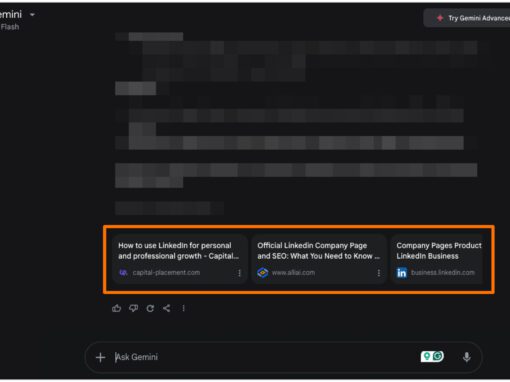
The biggest shift we’ve seen this year is the full integration of AI Overviews (formerly SGE) into local results. In the past, a homeowner might search for "roofers near me" and scroll through a list of websites. Today, Google’s AI often synthesizes an answer, recommending three specific businesses based on their "trust signals": which include your reviews, your website’s technical health, and how well you’ve filled out your service area data.
Google has also cracked down hard on "ghost" listings. If you're a service area business (SAB) without a physical office that customers visit, you can no longer get away with using a P.O. Box or a virtual office. Google’s verification process is now video-heavy and requires proof of equipment and branded vehicles. For companies in specialized niches, like digital marketing for concrete companies, showing real, boots-on-the-ground activity is the only way to stay in the Map Pack.

Is the Google Business Profile still the king of local search?
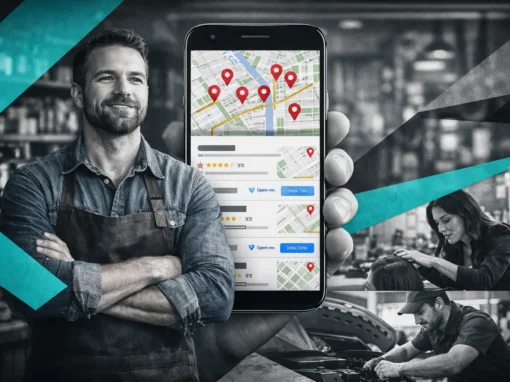
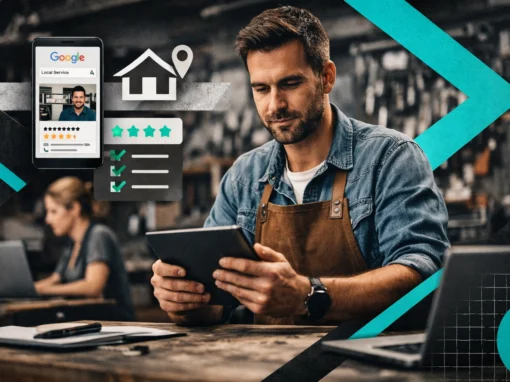
Absolutely. In 2026, your Google Business Profile (GBP) is arguably more important than your actual website for lead generation. Google has introduced "interactive lead capture" directly within the profile. This means users can request quotes or even have an AI assistant call your business to check availability without ever leaving the search results page.
If your profile is stagnant, you're losing. We recommend treating your GBP like a social media feed. You should be:
- Uploading "Job of the Week" photos.
- Answering the Q&A section yourself to feed the AI more data.
- Updating your services list every time you add a new capability.
For those in competitive fields, such as digital marketing for roofing contractors, these small updates signal to Google that your business is active and reliable.

How do AI Overviews impact contractor leads?
AI Overviews are the summaries at the top of the search page. They don’t just list names; they explain why a business is being recommended. For example, it might say, "John’s Plumbing is highly rated for 24/7 emergency service and has 15 positive reviews regarding water heater installs in the last month."
To show up here, your website needs to be "machine-readable." This involves using specific code called Schema Markup. If your site isn't technically sound, Google's AI will skip over you. This is why we tell our clients that checking your website on mobile devices and ensuring fast load times isn't just a suggestion: it’s a requirement for survival in 2026.
Why does review "freshness" beat total review count?
In 2025 and 2026, we saw a massive influx of fake, AI-generated reviews. To combat this, Google now prioritizes recency and detail over the total number of stars. A business with 500 reviews from two years ago will often lose to a business with 50 reviews, five of which were posted this week and include photos of the finished project.
Google’s AI is smart enough to read the sentiment in your reviews. It looks for keywords related to your services. If you’re doing renovation contracting, you want reviews that mention "kitchen remodel," "on-time," and "fair pricing." These specific words help the AI categorize you as an authority in those specific jobs.

How should service area businesses (SABs) handle proximity rules?
Proximity: how close you are to the person searching: is still a top ranking factor. However, for contractors who travel to their customers, Google has gotten better at understanding "service areas."
Instead of just checking a box for a 50-mile radius, you should create individual location pages on your website for the major cities or neighborhoods you serve. These shouldn't be "copy-paste" pages. They need local landmarks, local photos, and mentions of specific projects you’ve done in that area. This tells Google that even though your office is in one town, you are a legitimate local choice three towns over.
Your 30/60/90 Day Local SEO Action Plan
Most contractors are too busy running their crews to spend four hours a day on marketing. That’s why at Funky Moose Digital, we focus on high-impact actions. Here is how you should approach the next three months:
The First 30 Days: The Foundation
- Audit your GBP: Ensure your categories are correct and your service area is accurately defined.
- Verify your data: Make sure your Name, Address, and Phone Number (NAP) are identical across the web.
- Fix your mobile site: If your site doesn't load in under 3 seconds on a phone, fix it now.
The 60-Day Mark: Content and Engagement
- Launch a Review Campaign: Use a tool to text customers immediately after a job is finished to ask for a review.
- Add Local Pages: Build out 2-3 pages targeting your highest-value service areas with unique content.
- Weekly Updates: Post one photo and one short update to your Google Business Profile every single week.
The 90-Day Mark: Expansion and Optimization
- Analyze the Data: Look at your GBP insights. Are people calling you or clicking to your website?
- Refine your Services: If the AI is recommending you for "repair" but you want "installs," adjust your website copy to emphasize the bigger jobs.
- Backlink Building: Reach out to local suppliers or community blogs to get links back to your site.

Is it time to call in the pros?
Doing this yourself is a full-time job. Between managing crews and quoting jobs, most contractors find that their marketing falls by the wayside until the phone stops ringing. By then, it’s often too late to catch up quickly because SEO takes time to build momentum.
If you’re ready to stop guessing and start growing, we’ve helped businesses across various industries take control of their local presence. Whether you need a full strategy or just someone to handle the technical heavy lifting, we’re here to help.

Let’s Get Your Phones Ringing
You don’t need to be an expert in AI or algorithms to win in 2026; you just need to be more consistent than your competition. If you want to see how your current online presence stacks up against the new "2026 rules," we’d love to chat.
Request a Quote today and let’s put together a plan that actually works for your trade. Or, if you want to learn more about our philosophy, check out our About page to see why we’re the preferred partner for contractors.
Key Takeaways
- AI is the filter: Google’s AI Overviews now decide which contractors get highlighted based on trust and data accuracy.
- Activity is mandatory: A stagnant Google Business Profile is a dead profile; weekly updates and fresh reviews are required to rank.
- Freshness over volume: Five new reviews with photos are more valuable than a hundred old ones from three years ago.
- Location pages matter: For service area businesses, specific pages for different neighborhoods help bypass strict proximity filters.
- Technical health is non-negotiable: Your website must be mobile-fast and machine-readable to survive the 2026 algorithm updates.