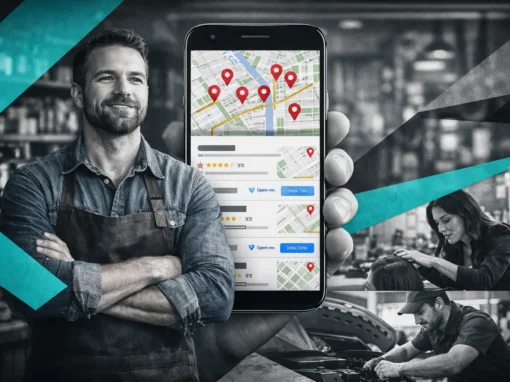

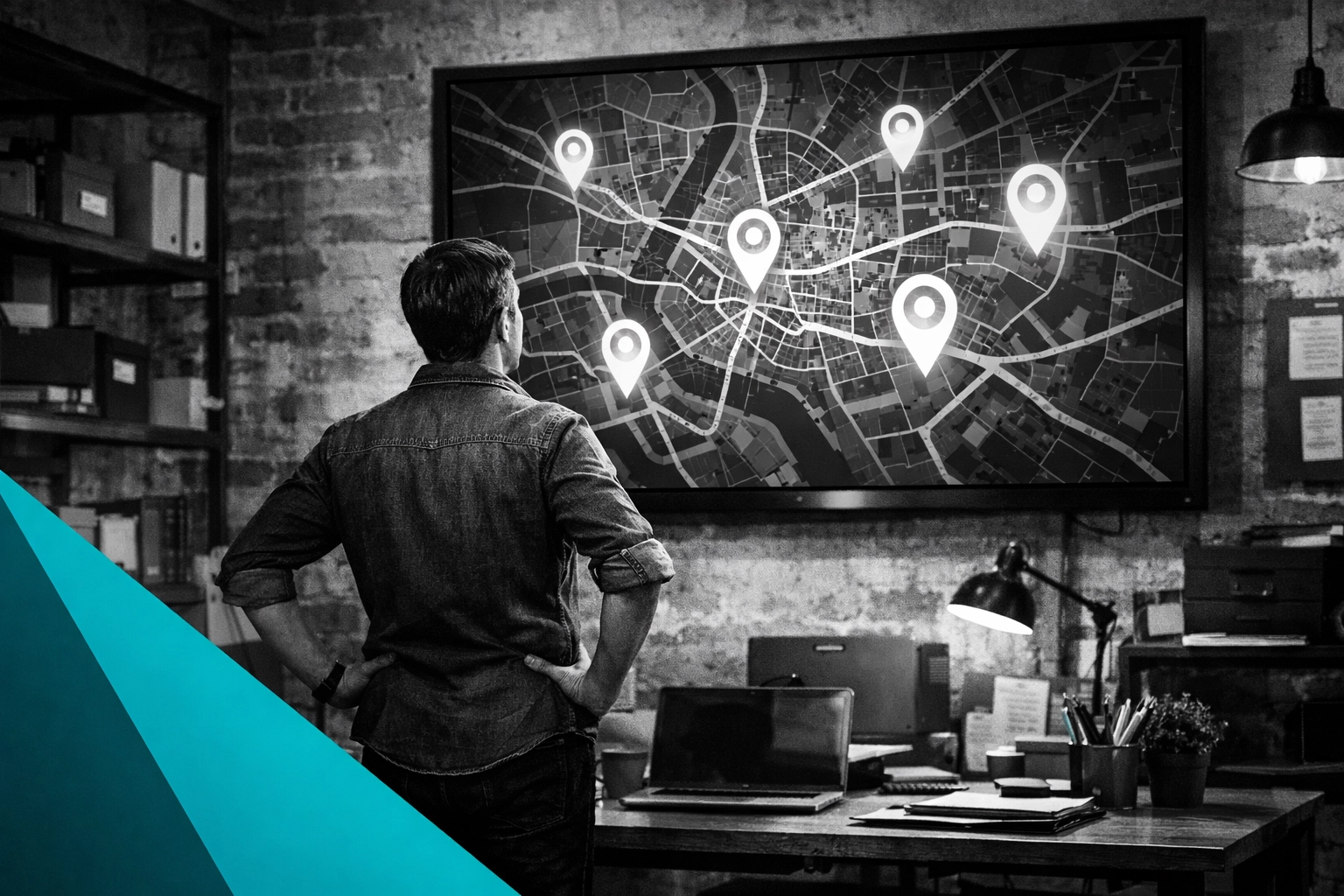
If you’re a business owner in 2026, you already know the score. When someone’s basement is flooding or they’ve decided it’s finally time to gut that 1990s kitchen, they aren’t scrolling through page ten of a search engine. They’re opening Google Maps, typing in a service, and looking at the first three names that pop up.
In the industry, we call that the "Local 3-Pack." In your bank account, we call it "The Difference Between a Fully Booked Month and Crickets."
But here’s the problem: your competitors are also trying to squeeze into those three spots. It’s a digital street fight out there. The rules have changed since 2024, and the old tricks, like stuffing your business name with keywords or buying 100 fake reviews from a bot farm, will get you kicked out of the ring faster than a flyweight in a heavyweight bout.
Let’s break down how to actually improve your Google ranking and win the local showdown in 2026.
The Combatants: Proximity vs. Relevance
For years, Google Maps was obsessed with proximity. If you were the closest plumber to the user, you won. But in 2026, Google’s AI has grown up. It now values Relevance and Prominence just as much as, if not more than, physical distance.
This is great news for you. It means if you’re a high-end renovator or a specialized HVAC tech, you can outrank the guy who is technically closer to the customer just by proving you’re the better choice for that specific job.
To win the showdown, you need to prove three things to the algorithm:
- You are who you say you are.
- You do exactly what the customer is looking for.
- People actually like doing business with you.
Round 1: The Google Business Profile (GBP) Extreme Makeover
Your Google Business Profile is your digital storefront. If it’s messy, outdated, or generic, nobody is coming inside.
Precision Category Selection
Don’t just settle for "Contractor" or "Retailer." Google allows for primary and secondary categories. If you specialize in luxury kitchen remodels, make sure "Kitchen Remodeler" is front and center. Look at what the top three guys in your city are using and ensure you’re covering those bases.
The Death of Corporate Speak
In 2026, people (and Google) are tired of generic descriptions. "We provide high-quality service with a commitment to excellence" says absolutely nothing. Instead, try: "Saskatoon’s go-to crew for custom deck builds and outdoor living spaces. We’ve handled over 300 local projects since 2018."
Use location-specific phrases naturally. Mention the neighborhoods you serve by name. It helps the AI connect your business to the local community.
Round 2: The Visual Evidence
We’ve said it before and we’ll say it again: stop using stock photos.
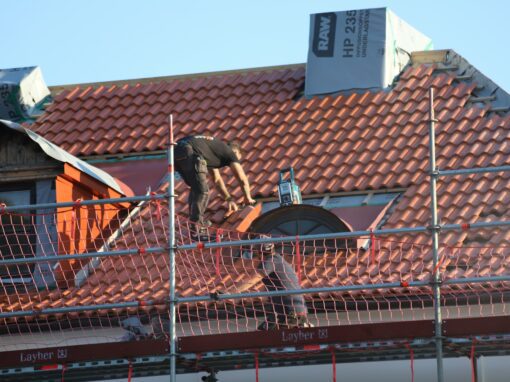
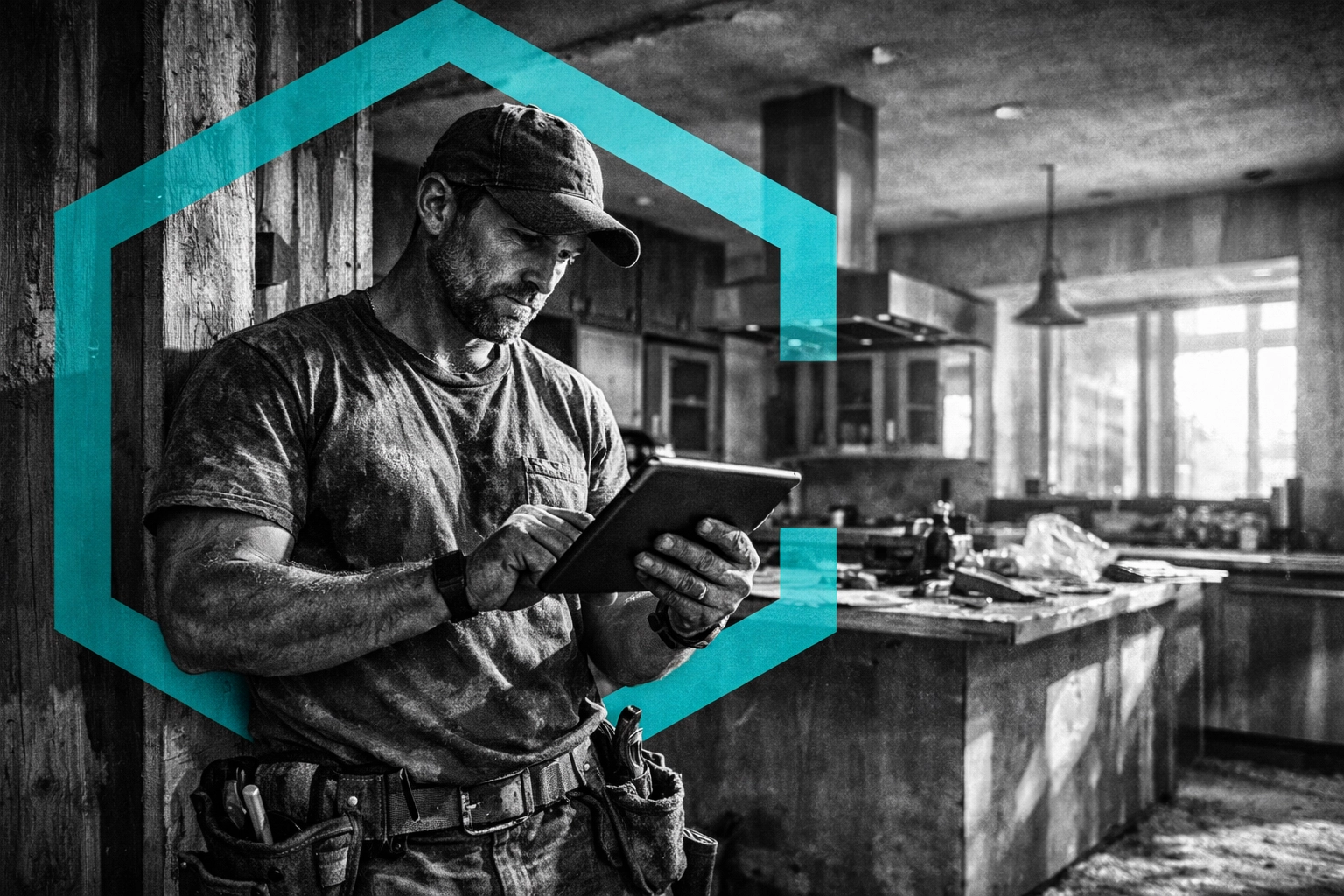
In 2026, customers can smell a stock photo from a mile away. They want to see your trucks, your team, and the actual work you’ve done. Google also uses image recognition to "read" your photos. If you upload a picture of a newly installed water heater, Google knows it’s a water heater. This adds a massive boost to your relevance for those specific search terms.
Pro-Tip: Take a photo of the job site and upload it while you’re still there. The geotag metadata in that photo tells Google, "Hey, this business is actually doing work in this specific neighborhood right now." It’s the ultimate proof of local activity.
Round 3: The Reputation Engine
Reviews have always been important, but in 2026, the way you handle them is the tiebreaker.
The Google "Verified" Badge
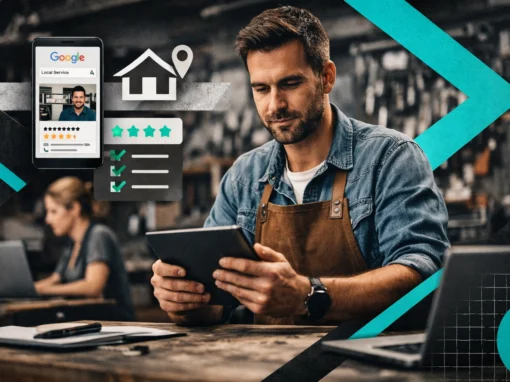
You might have noticed the shift from Google Guaranteed to the more robust "Google Verified" systems. Staying verified is about more than just a background check; it’s about maintaining a consistent flow of positive feedback. If you want to stand out from the crowd, you need a system to ask for reviews the second the job is done.
Keywords in Reviews
You can’t (and shouldn’t) tell customers what to write. However, you’ll notice that Google often highlights snippets of reviews like "The best emergency roof repair in the city." Google is looking for specific service keywords within those reviews. When you respond to a review: and you must respond to all of them: mention the service.
Customer: "Great job on the pipes!"
You: "Thanks, Sarah! Glad we could get that emergency plumbing repair sorted for you in the West End."
See what we did there? You just fed the algorithm exactly what it wanted without being a robot.
Round 4: Technical Authority (Without the Headache)
You don’t need to be a coder to win at local SEO, but you do need to make sure your website isn't working against you.
Schema Markup: The Secret Language
Schema is a bit of code that tells Google exactly what your business is. It’s like a digital ID card. For local businesses, "LocalBusiness Schema" ensures that your name, address, and phone number (NAP) are crystal clear. If Google sees different addresses for you on different sites, it gets confused. And a confused Google is a Google that doesn’t rank you.
Mobile is King
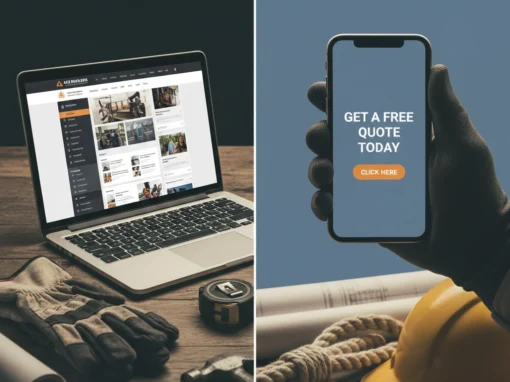
If your website takes five seconds to load on a phone, the user is gone before they even see your logo. Make sure to check your website on mobile frequently. A fast, mobile-responsive site sends a signal to Google that you offer a good user experience, which helps keep your Maps ranking high.
Round 5: Location-Specific Landing Pages
If you serve multiple cities or distinct neighborhoods, don't just dump them all on one "Contact Us" page.
Create dedicated landing pages for each major area. If you’re a roofer in Regina but you also serve Lumsden and White City, create a page specifically for "Roofing Services in Lumsden."
Include:
- Local testimonials from people in that area.
- Mention of local landmarks or specific neighborhood challenges (e.g., "Handling the unique soil conditions in [Neighborhood Name]").
- An embedded Google Map showing your service area.
This creates a "Local Content Silo" that proves to Google you aren't just a guy with a truck: you’re a local authority.
The ROI: Why This Matters
At the end of the day, outranking your competitors on Google Maps isn't about vanity; it's about ROI. The "Map Pack" gets the lion's share of clicks. Those clicks turn into phone calls. Those phone calls turn into estimates.
If you’re spending money on Google Ads, you’re already ahead of the curve, but your Maps presence is the "organic" foundation that makes everything else work better. When someone sees your ad at the top of the page AND sees you in the top three of the Map Pack, you’ve basically claimed the entire digital block.
Wrapping Up the Showdown
Winning the Google Maps showdown in 2026 isn't a "set it and forget it" task. It’s about consistency.
- Post weekly updates to your Google Business Profile (treat it like a professional version of Instagram).
- Keep the reviews coming and respond to them like a human.
- Audit your website to ensure your local info is consistent.
If you’re tired of seeing your less-talented competitor snag all the local leads just because they have a better digital footprint, it’s time to fight back. At Funky Moose Digital, we help small businesses and trades navigate these technical battles so you can get back to doing the actual work.
Ready to claim your spot in the 3-pack? Let's get to work.