TL;DR: Lead generation for trades works best when your business is easy to find, easy to trust, and easy to contact when someone is ready to hire. A practical system combines local search, conversion-focused pages, targeted advertising, fast follow-up, and simple pipeline tracking so more inquiries turn into booked work.
Stop chasing and start being findable
The short answer: You need a system that brings the right prospects to you instead of relying on cold outreach, random referrals, or shared lead websites. When a homeowner searches for an electrician, plumber, HVAC technician, landscaper, or renovation contractor, your business should appear with clear proof that you can help. Your website and intake process should then make contacting you simple. Finally, every inquiry needs a prompt response and a clear next step so good opportunities do not disappear.
What does lead generation for trades actually mean?
Lead generation is the process of attracting potential customers, getting their contact information or inquiry, and moving them toward a conversation, quote, appointment, or sale.
For a trades business, that might look like:
- A homeowner searches for an emergency plumber and calls your Google Business Profile.
- Someone clicks a Google Ad for furnace replacement and fills out a quote form.
- A property manager finds your commercial cleaning company through local search.
- A past landscaping customer refers a neighbour after seeing your recent project photos.
- A small business owner visits your website after searching for an electrician and books a consultation.
The important distinction is that a lead is not the final goal. The goal is a qualified conversation that can turn into a profitable job.
A business can generate hundreds of form submissions and still struggle if the inquiries are outside its service area, focused only on the lowest price, or never followed up. Strong lead generation connects visibility, trust, sales process, and follow-up.
That is why lead generation for trades is about more than getting clicks.
Why do small businesses end up chasing leads?
Is your marketing attracting interest or purchase intent?
Many small businesses use whatever marketing channel is easiest to start. They post occasionally on social media, list their business in a few directories, or buy leads from a platform that sends the same inquiry to several companies.
These activities can create attention, but attention is not always buying intent.
For example, a roofing company may receive a request from someone who is collecting five free estimates without a project timeline. A web designer may get inquiries from businesses that want premium work at a starter budget. A plumber may receive calls from outside their service area because their targeting is too broad.
The issue is not always a lack of leads. Often, it is a lack of control over where those leads come from and what happens after they arrive.
Are you relying on referrals alone?
Referrals are valuable because trust is already established. However, referrals can be inconsistent. A business may be fully booked one month and quiet the next, depending on whether past customers happen to mention it.
A reliable marketing system does not replace referrals. It gives them support. When your Google presence, website, reviews, and follow-up process are working together, your business has more than one way to bring in good work.
How can local search bring better leads to your business?
Does your Google Business Profile make it easy to hire you?
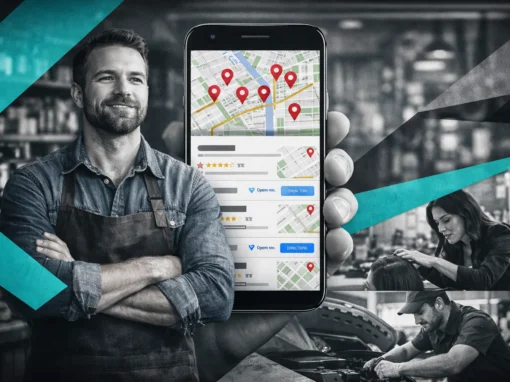
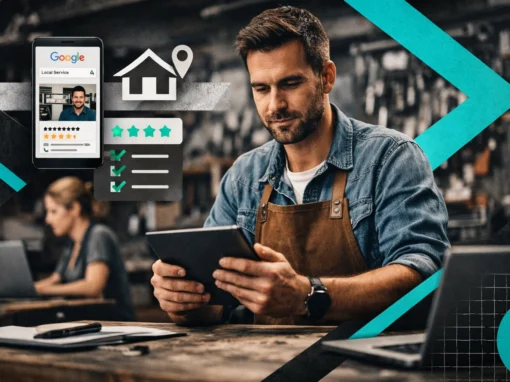
Your Google Business Profile is often one of the first places a local customer sees your business. It can show your phone number, service area, reviews, photos, hours, website, and directions before someone ever visits your site.
Keep it useful and current by:
- Choosing accurate primary and secondary categories
- Listing the services you actually provide
- Defining your service area clearly
- Uploading recent photos of completed work, equipment, vehicles, and your team
- Keeping your hours and contact details accurate
- Responding to reviews professionally
- Asking satisfied customers for detailed, honest feedback
A landscaper should not only show a logo and a phone number. Photos of finished yards, retaining walls, patios, and seasonal maintenance help potential customers understand the quality of the work. A cleaning company can show before-and-after results. An HVAC company can share installation photos and maintenance tips.
For more context, see our guide on whether local SEO still matters for contractors in 2026.
Do your website pages match what people are searching for?
A general homepage is rarely enough for every service you provide. Someone searching for “tankless water heater installation” should ideally land on a page about tankless water heaters, not a generic page that lists ten unrelated services.
Service-specific pages can explain:
- What the service includes
- Which customers it is best for
- What areas you serve
- What makes your process different
- What customers should expect
- How to request a quote or book a call
The same principle works outside the trades. A bookkeeping firm can create pages for monthly bookkeeping, payroll, and year-end support. A physiotherapy clinic can create separate pages for sports injuries, post-surgery care, and chronic pain.
This is a core part of digital marketing for contractors: connecting the customer’s specific problem to a clear solution.

How do you turn website visitors into real inquiries?
Can someone contact you in under a minute?
When a potential customer visits your website, they should not have to search for your phone number or read several paragraphs before finding out how to get started.
Make the next step obvious with:
- A click-to-call phone number near the top of the page
- A short quote or contact form
- A clear service area
- Strong project photos and customer reviews
- A simple explanation of what happens after someone contacts you
- Calls to action such as “Request a Quote” or “Book an Assessment”
Do not make the form longer than necessary. Name, phone number, email, location, service needed, and a short description are usually enough to begin the conversation.
A landing page can be especially useful for paid advertising because it focuses on one service and one action. If you are advertising furnace repair, the page should focus on furnace repair: not every service your company has ever offered.
You can see examples of an integrated approach on our services page, including websites, landing pages, advertising, and pipeline management.
Does your website build trust before the first call?
People want to know whether you are legitimate, capable, and suitable for their project before they make contact.
Useful trust signals include:
- Recent reviews
- Real photos of completed jobs
- Credentials, insurance, or memberships where relevant
- Clear service areas
- Straightforward explanations of your process
- Examples of the types of jobs you want more of
- A professional, mobile-friendly website
This matters for every small business. A homeowner comparing electricians wants confidence. So does a restaurant owner hiring a commercial cleaner or a retailer looking for a website redesign.
How can Google Ads help you get more leads as a contractor?
Are you targeting people who are ready to hire?
If you are wondering how to get more leads as a contractor, paid search can help you reach people with immediate intent.
Good campaign targeting usually focuses on searches connected to a real service and location, such as:
- Emergency electrician in Regina
- Furnace repair near me
- Commercial snow removal Saskatoon
- Kitchen renovation contractor
- Lawn maintenance company near me
Separate urgent services from planned projects. Someone searching for “burst pipe repair” is in a different position from someone researching “bathroom renovation ideas.” The ad, landing page, response time, and sales process should reflect that difference.
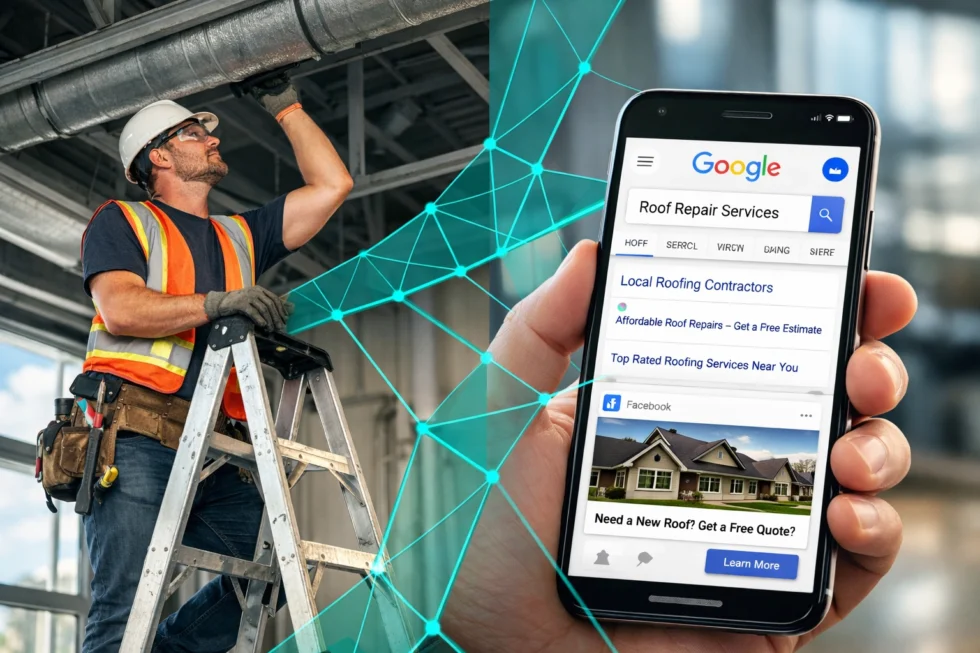
Google also offers lead form assets, which can let eligible users submit their details directly from an ad. For eligible local service categories, Local Services Ads can provide another way to generate calls, messages, or bookings.
Paid advertising should be measured by more than impressions and clicks. Track qualified leads, booked appointments, completed jobs, revenue, and profitability.
How does follow-up stop good leads from going cold?
Are you responding while the customer is still looking?
A customer who contacts your business may also be contacting two or three competitors. If your response takes a day, the job may already be booked elsewhere.
Set up a simple process:
- Send an immediate confirmation when a form is submitted.
- Return missed calls as quickly as possible.
- Use an automated text response when you are on a job site.
- Record every inquiry in one place.
- Set a follow-up reminder if the customer is not ready to book.
- Mark the outcome: booked, lost, unqualified, or still open.
This does not mean pestering people. It means giving them a clear, professional path to continue the conversation.
A small CRM can also show which marketing sources produce the best customers. If Google Ads brings many inquiries but referrals produce the most profitable jobs, you can make better decisions about where to spend time and money. Our article on tracking real jobs to measure marketing ROI covers this in more detail.
What should a small business prioritize first?
Do you need every marketing channel at once?
No. Most small businesses are better off doing two or three things consistently than starting six channels they cannot maintain.
A practical starting order is:
- Fix your website’s contact process.
- Improve your Google Business Profile.
- Create or improve pages for your most profitable services.
- Set up a basic CRM or lead tracking system.
- Start collecting regular customer reviews.
- Test tightly targeted Google Ads if you need more immediate demand.
- Add social media content that shows real work and answers common customer questions.
For tradespeople, online marketing for tradespeople should support the way customers actually buy. Emergency services need speed and phone visibility. Renovation and landscaping businesses need project photos, trust, and a clear consultation process. Commercial service businesses may need stronger proof of reliability, insurance, and capacity.
The right system depends on your service, location, job value, and schedule: not on whatever marketing trend is getting the most attention.
Build a lead system that supports your schedule
If you want more work without spending every evening chasing inquiries, start by looking at the whole customer journey.
Can the right customer find you? Can they quickly understand what you do? Can they trust you enough to reach out? Do you respond promptly? Can you tell which marketing activities are producing profitable jobs?
Funky Moose Digital helps trades businesses connect those pieces through Google Ads, landing pages, website improvements, social media, and CRM pipeline management. If you want a straightforward look at where your current system is leaking opportunities, request a quote and start the conversation.
Key Takeaways
- Lead generation for trades is about booked work, not just clicks or form submissions.
- A strong local presence combines your Google Business Profile, service pages, reviews, and real project photos.
- Targeted landing pages and clear calls to action make it easier for interested prospects to contact you.
- Fast responses and simple CRM tracking help prevent good inquiries from falling through the cracks.
- Start with two or three channels that produce profitable jobs instead of trying to manage everything at once.